5 Small Spending Changes That Could Save You £500 Before Christmas
Saving an extra £500 for Christmas sounds rather ambitious when you’re already paying for food, energy, petrol and everything else that seems to get more expensive by the month.
But finding £500 doesn’t necessarily mean making one dramatic cut to your household budget. Spread across a few months, it can be a collection of surprisingly ordinary changes: one less takeaway, a couple fewer coffees, some subscriptions you’d forgotten you had and a clear-out of things gathering dust at home.
The trick is to start early and treat Christmas saving as a gradual habit rather than something to worry about when December arrives.
Here are five relatively painless places to begin.
1. Hunt Down the Subscriptions You Barely Use
Subscriptions have a habit of becoming invisible.
A streaming service signed up for during a particular series, an app you tried once, cloud storage, premium memberships and free trials that quietly became paid subscriptions can all continue leaving your account long after you stopped thinking about them.

Go through the last couple of months of bank and credit card statements and look specifically for recurring payments.
Finding £20 a month that you’re happy to cancel would put around £60 back into your pocket over three months.
Be careful how you cancel, though. If you have an ongoing contract, cancel it properly through the company rather than simply stopping the direct debit or card payment. Keep the cancellation email or confirmation too.
2. Swap Just One Takeaway a Week
Nobody needs to be told that never ordering another takeaway would save money. It would also make this challenge considerably less appealing.
Instead, choose one.

If you normally spend around £20 on a takeaway and can replace it with an £8 dinner made at home, that is £12 saved in a single evening.
Do that once a week for 15 weeks and you’re looking at approximately £180.
Convenience is often the reason we order food rather than the food itself, so make the alternative easy. Keep a couple of homemade meals in the freezer, have a favourite quick pasta dish up your sleeve or plan something particularly good for the evening when you’re most likely to reach for a delivery app.
You’re not banning takeaways. You’re simply having fewer of them.
3. Keep the Coffees You Actually Enjoy
The much-maligned takeaway coffee isn’t going to single-handedly solve anybody’s finances.
But there is a difference between buying a coffee because you’re meeting a friend somewhere lovely and automatically buying one every time you pass a café.
If two £3 coffees disappear from your usual weekly spending, that’s £6 saved. Over 15 weeks, it becomes £90.

The easiest way to make this sustainable is to decide which coffees are genuinely worth the money.
Keep Saturday morning coffee with a friend. Keep the cappuccino you love after lunch. Consider dropping the ones bought purely out of habit on the way to work.
Small savings are far easier to maintain when they don’t feel like punishment.
4. Try One No-Spend Day Every Week
A no-spend day sounds more dramatic than it is.
Choose one day each week when you buy nothing non-essential. Food already in the house, bills and normal travel don’t count; the idea is simply to interrupt all those little purchases that happen without much thought.
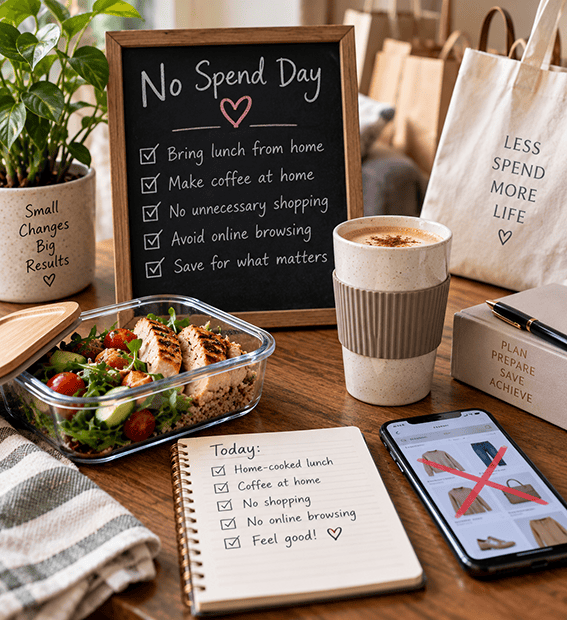
That could mean taking lunch rather than buying it, skipping the browse around the shops, making coffee at home and avoiding an evening online-shopping scroll.
Even if it prevents only £5 of unnecessary spending each week, that’s around £75 over 15 weeks.
There is one important rule: don’t cheat by simply buying everything the day before or postponing it until tomorrow. The aim is to identify purchases you didn’t really need in the first place.
5. Turn Your Clutter Into Christmas Money
This is potentially the quickest win of all because it doesn’t involve cutting your lifestyle.
Most homes contain perfectly good things that nobody uses anymore: clothes that no longer fit, old phones, small appliances, furniture, children’s items, unopened gifts and the contents of that mysterious cupboard everyone avoids opening.
Set yourself a target of making £100 from things you already own.

You don’t necessarily need one valuable item. Ten £10 sales get you to exactly the same place.
Check the selling and postage fees before deciding whether something is worth listing, and use the payment system provided by the selling platform wherever possible. Don’t hand over or post an item simply because somebody sends you a screenshot purporting to show that payment has been made.
The Most Important Part: Actually Keep the Money
There is a catch to all of this.
Save £12 by cooking instead of ordering a takeaway, then spend £12 browsing online that evening, and you haven’t saved anything.
Create a separate savings account or pot specifically for Christmas and move the money across whenever you make one of these swaps.
Didn’t order the takeaway? Transfer £12.
Skipped two coffees? Move £6.
Cancelled a £9.99 subscription? Put £9.99 into the pot.
Watching the balance increase also makes the challenge considerably more satisfying.
Could You Really Save £500?
Using these examples, the numbers can add up surprisingly quickly.
Cancelling £20 of monthly subscriptions could save around £60 over three months. Replacing one weekly takeaway could contribute approximately £180 over 15 weeks, while dropping two £3 coffees each week could add another £90.
One £5 no-spend day each week represents another £75, and selling £100 worth of unwanted belongings takes the illustrative total beyond £500.
Of course, everyone’s spending is different. You might save considerably less, or discover areas where you can comfortably save more.
The £500 isn’t really the important part.
Even £200 or £300 set aside before the festive season is money that doesn’t have to come out of December’s salary or end up sitting on a credit card in January.
And unlike a brutal pre-Christmas spending ban, these are habits you might actually want to keep.
If money is already so tight that you’re struggling with essential household bills, saving for Christmas shouldn’t take priority. Rent or mortgage payments, council tax, energy and other essential commitments come first, and free debt advice is available for anyone who is struggling.
This article was inspired by original expert guidance supplied by insolvency specialist Molly Monks F.I.P.A. and Parker Walsh.
Explore more with Crave, your lifestyle magazine in the UK for food, wellbeing and travel inspiration.