

Mushroom Foraging in the UK: How to Explore Wild Fungi Safely
There is something rather irresistible about mushroom season. One week, the woodland floor appears relatively uneventful; the next, mushrooms seem to have appeared everywhere — pushing through fallen leaves, growing from decaying logs and forming strange little colonies beneath the trees.
Once you start noticing fungi, an ordinary autumn walk becomes considerably more interesting.
It is easy to understand why mushroom foraging in the UK has become so appealing. It gets us outdoors, encourages us to pay closer attention to nature and introduces an entirely new dimension to Britain’s woodlands, meadows and countryside.
Wild mushrooms, however, require considerably more caution than blackberries.
Britain is home to an extraordinary variety of fungi. Some are edible, many are simply inedible, and others contain toxins capable of causing severe illness or even death. To make matters more complicated, appearances can vary as mushrooms mature, and potentially dangerous species can sometimes be confused with edible ones.
For beginners, therefore, the aim shouldn’t be to walk into a woodland and immediately find something for dinner.
Learn to identify fungi first. Eating them can come much later.
Here’s what you need to know before getting started.
The Most Important Rule of Mushroom Foraging
If you remember nothing else from this guide, remember this:
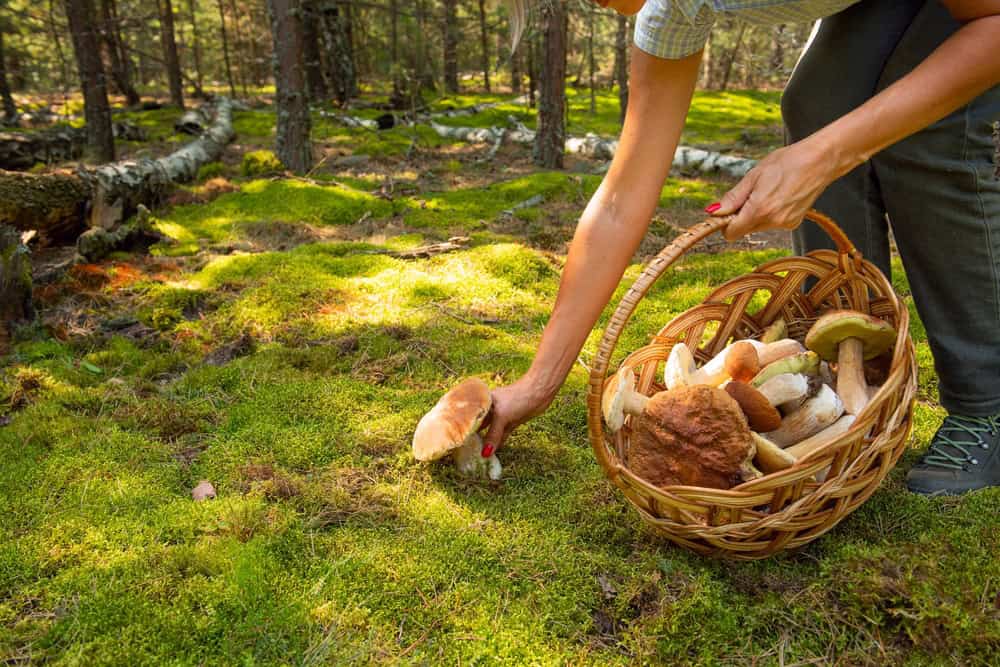
Never eat a wild mushroom unless you are completely certain of its identity and that the species is safe to eat.
There is no universal trick for separating edible mushrooms from poisonous ones.
You can’t determine whether a mushroom is safe because of its colour, because an animal has eaten it, because its cap peels or because an identification app produces a convincing result.
If there’s any uncertainty, leave it alone.
When the possible consequence of a mistake is serious poisoning, “probably” isn’t good enough.
When Is Mushroom Season in the UK?
Although fungi can be found throughout much of the year, autumn is generally the main mushroom season in the UK.
September, October and November can be particularly productive as cooler temperatures and wetter conditions encourage many species to produce the fruiting bodies we recognise as mushrooms.
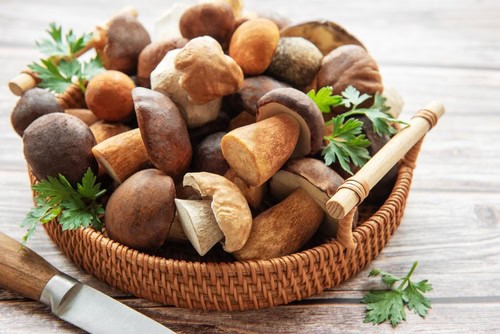
There isn’t a precise date when mushroom season begins.
Weather conditions, location and individual species all influence when fungi appear. A period of rain followed by relatively mild weather can result in a sudden flush of mushrooms, while prolonged frost can bring the season for many species to an end.
Some fungi also appear during spring and summer, so don’t assume autumn is the only time worth looking.
Where Are the Best Places to Find Wild Mushrooms?
Different fungi favour different environments, which makes habitat an important part of learning about mushrooms.
Woodland is an obvious place to start, particularly areas containing mature trees and plenty of decaying organic material.

Wild fungi can also appear in:
- deciduous woodland
- coniferous forests
- grassland and meadows
- parks
- gardens
- woodland edges
- beneath leaf litter
- on fallen logs and dead wood
- on living trees
When you find a mushroom, don’t look only at the mushroom itself.
Look at its surroundings.
Which trees are growing nearby? Is the mushroom emerging from soil, grass or timber? Are there several growing together? Is the ground particularly damp?
The location can provide important clues when you’re trying to establish which species you’ve found.
Why Mushroom Identification Is So Difficult
A photograph of the top of a mushroom is rarely enough to identify it confidently.
Mushroom identification can involve examining numerous characteristics, including:
- cap shape, size, colour and texture
- gills, pores or other structures beneath the cap
- stem shape and markings
- rings or skirts around the stem
- the very bottom of the stem
- colour changes after bruising or cutting
- smell
- spore colour
- habitat
- nearby trees
- how and where specimens are growing
Mushrooms also change as they develop.
A tiny young mushroom may look remarkably different once its cap has fully opened. Rain can wash colour and markings away, while insects and animals can damage features that would otherwise help with identification.
It’s one of the reasons mushroom foraging takes time to learn properly.
Don’t Trust an Identification App With Your Dinner
Plant and mushroom identification apps can be great fun.
Spot something interesting on a woodland walk, photograph it and an app can provide suggestions that give you somewhere to begin your research.
But that’s exactly what they should be: suggestions.
A phone camera can’t necessarily see the characteristics required to distinguish between similar species. An app may also be working from a single photograph when identification requires examination of the underside, stem base, habitat and other features.
Use technology to help you learn if you enjoy it.
Don’t use an app’s verdict as permission to eat a wild mushroom.
Poisonous Mushrooms in the UK
One of the first things beginner foragers should understand is that Britain really does have dangerously poisonous fungi.
This isn’t intended to make mushroom foraging frightening. It simply puts the importance of accurate identification into perspective.
Several groups are particularly notorious.
Death Cap
The Death Cap is one of Britain’s most dangerous mushrooms.
It contains powerful toxins capable of causing severe liver damage and potentially fatal poisoning.
Its appearance can vary, which is particularly important to understand. Searching for one exact shade or shape isn’t a safe method of ruling it in or out.
Destroying Angel
With a name like Destroying Angel, you can probably guess this isn’t something you want in your risotto.
This predominantly white woodland mushroom contains dangerous toxins and can cause life-threatening poisoning.
The existence of poisonous white mushrooms is also an important reminder that something doesn’t need to look sinister to be dangerous.
Deadly Webcaps
Some webcap mushrooms contain toxins capable of causing serious kidney damage.
One particularly worrying feature of certain mushroom poisonings is that symptoms aren’t necessarily immediate. Someone feeling well shortly after eating a wild mushroom doesn’t automatically mean they’re safe.
Beginners don’t need to become experts in every poisonous fungus before enjoying mushroom spotting.
They do need to understand that potentially deadly species exist.
Ignore These Common Mushroom Myths
Mushroom folklore has produced some remarkably persistent rules for deciding whether a fungus is edible.
Unfortunately, nature hasn’t made things that convenient.
“Animals eat it, so it must be safe”
Different animals can tolerate substances that humans cannot.
A slug, squirrel or other animal having a nibble tells you nothing reliable about whether you should do the same.
“Bright mushrooms are poisonous”
Some brightly coloured mushrooms are toxic.
Some aren’t.
And some exceptionally dangerous fungi can look rather unremarkable.
Colour alone tells you very little about edibility.
“If the cap peels, you can eat it”
This isn’t a reliable test.
Never decide whether a mushroom is edible based on whether its skin can be peeled.
“Mushrooms growing on trees are safe”
Also false.
Where a fungus grows can help with identification, but growing from wood certainly doesn’t guarantee that it’s edible.
“Cooking destroys the poison”
Never attempt to make an unidentified mushroom safe by cooking it.
Some mushroom toxins aren’t made harmless by ordinary cooking.
What About White Gills, Rings and Bulbous Stems?
You’ll sometimes encounter beginner advice suggesting that particular features automatically indicate a poisonous mushroom.
Reality is more complicated.
White gills, a ring around the stem and a bulbous base can all be extremely important identification characteristics. However, no individual feature should be treated as a universal test of whether something is poisonous.
Some edible mushrooms share characteristics with poisonous ones.
Likewise, not every poisonous mushroom comes conveniently equipped with the same warning signs.
Mushroom identification is about putting multiple pieces of information together to establish the species.
That’s very different from running through a three-point “safe to eat” checklist.
Be Particularly Careful With Young Mushrooms
Immature mushrooms can be particularly difficult for beginners because some haven’t yet developed their most recognisable features.
Young mushrooms from certain groups may initially emerge enclosed within tissue, producing a rounded appearance before the recognisable mushroom develops.
That creates potential for confusion with other rounded fungi such as puffballs.
Cutting a suspected puffball vertically through the centre can reveal internal structures that aren’t visible from the outside, but beginners still shouldn’t assume that every round white mushroom is something to eat.
If you can’t confidently establish exactly what you’ve found, don’t eat it.
The Best Way to Learn Mushroom Foraging
For complete beginners, one of the best investments isn’t a fancy basket.
It’s a guided foraging course.
Learning alongside an experienced and reputable mushroom forager allows you to see identification happening in the field.
You can examine how mushrooms relate to particular trees, compare similar species side by side and learn which characteristics experienced foragers actually pay attention to.
A good UK field guide is also invaluable.
Use it alongside your own observations rather than simply flicking through photographs looking for the nearest visual match.
And accept that learning fungi is a long-term hobby.
You don’t need to identify everything you encounter.
Take Photographs Before Picking Anything
Photography is one of the easiest ways to become better at identifying mushrooms.
Before touching a specimen, photograph it where it’s growing.
Ideally, record:
- the cap from above
- the underside
- the complete stem
- the stem base
- specimens at different stages of development
- the immediate surroundings
- nearby trees and plants
Those images provide far more useful information than one mushroom carried home without any record of where you found it.
They also allow you to enjoy mushroom foraging without collecting anything.
You Don’t Have to Pick Every Mushroom
The word “foraging” tends to imply bringing something home.
It doesn’t have to.
Learning about fungi can be every bit as enjoyable when the mushroom remains exactly where you found it.
Fungi play important roles within ecosystems, from breaking down dead organic material to forming complex relationships with plants and trees.
Poisonous mushrooms are part of that ecosystem too.
Don’t kick them over or destroy them because they’re dangerous to humans.
Take a photograph and leave them to get on with being mushrooms.
Can You Legally Pick Wild Mushrooms in the UK?
Before collecting wild fungi, you need to consider where you’re foraging.
Land ownership, local bylaws, protected areas and site-specific rules can all affect whether collecting is permitted.
Private land may require the landowner’s permission, while nature reserves and other protected locations can have restrictions on removing fungi and other natural material.
Commercial collection raises additional considerations.
The easiest approach is to check the rules for the particular woodland, estate, park or other site before you start filling a basket.
If there are signs telling visitors not to pick fungi, respect them.
How to Forage Responsibly
Being able to identify an edible mushroom doesn’t automatically mean you should harvest every specimen you find.
Take only what you’re legally permitted to collect and what you genuinely intend to use.
Avoid disturbing surrounding vegetation or raking through leaf litter in search of fungi. Leave unfamiliar and unusual specimens where they are and don’t damage mushrooms you’re not collecting.
If you’re fortunate enough to find an impressive display of fungi, sometimes the best thing to take home is a photograph.
Should Beginners Eat Wild Mushrooms?
Not necessarily.
There’s a temptation when learning to forage to measure success by whether you found something edible.
Forget about dinner for a while.
Spend your first outings learning how mushrooms grow. Start recognising different structures. Notice which fungi appear beneath particular trees. Learn how dramatically one species can change as it matures.
If your eventual aim is to collect edible mushrooms, gain practical experience with someone who genuinely knows what they’re doing.
The supermarket sells mushrooms remarkably cheaply.
There’s no reason your first woodland walk needs to provide lunch.
What to Do If Someone Eats an Unknown Wild Mushroom
Suspected mushroom poisoning should be taken seriously, even if the person initially feels well.
Some mushroom toxins can cause delayed symptoms.
If someone has eaten an unidentified wild mushroom, seek medical advice promptly rather than waiting to see what happens.
For urgent or severe symptoms — including collapse, seizures, unconsciousness or serious breathing difficulties — call 999 or attend A&E.
For situations where you’re concerned that something potentially harmful has been swallowed but there isn’t an immediate life-threatening emergency, contact NHS 111 for advice.
Don’t deliberately make someone vomit unless instructed to do so by an appropriate medical professional.
If possible, keep photographs, remaining specimens or leftovers from the meal. These may help professionals determine what was consumed.
Make it very clear that wild mushrooms may have been eaten.
Mushroom Foraging With Children
Looking for fungi is a brilliant autumn activity for children.
Turn the walk into a mushroom safari.
Look for the smallest mushroom you can find. Search for different colours. Spot fungi growing from trees. Photograph unusual shapes and see whether you can learn more about them when you get home.
The important distinction is between looking and eating.
Young children should be supervised closely around wild fungi and taught never to put an unknown mushroom in their mouths.
What About Dogs and Wild Mushrooms?
Dogs can encounter wild fungi in gardens, parks and woodland just as easily as we can.
Don’t knowingly allow a dog to eat unidentified mushrooms.
If you suspect your pet has consumed wild fungi, contact a veterinary professional promptly and, where possible, photograph or retain a specimen of what you believe was eaten.
Don’t assume that a mushroom being harmless to humans automatically means it’s harmless to another species — or vice versa.
What Should You Take Mushroom Foraging?
You don’t need much equipment to begin exploring fungi.
A reputable UK mushroom field guide is an excellent starting point, along with a charged phone or camera, waterproof footwear and clothing appropriate for the weather.
A small notebook can be useful for recording habitats, dates and characteristics.
If you’re collecting specimens where you’re permitted to do so, use an appropriate container that prevents them from becoming crushed.
Most importantly, take your time.
Mushroom identification isn’t a race.
Frequently Asked Questions About Mushroom Foraging in the UK

What is the best time of year for mushroom foraging in the UK?
Autumn is generally the most productive period, with September, October and November often providing excellent conditions. However, fungi can appear at many different times of year depending on the species, location and weather.
Where should beginners look for mushrooms?
Woodland is an excellent place to begin because of the variety of fungi associated with trees, dead wood and leaf litter. Meadows, grassland, parks and gardens can also contain numerous species.
How can you tell whether a mushroom is poisonous?
There is no single visual test that reliably separates poisonous mushrooms from edible ones. The individual species needs to be accurately identified using multiple characteristics.
Are all white mushrooms poisonous?
No. However, some extremely dangerous British mushrooms are white, so colour should never be used as evidence that a mushroom is safe to eat.
Are mushroom identification apps safe?
They can be useful learning tools, but an app shouldn’t be relied upon to determine whether a wild mushroom is safe to eat.
Can you touch poisonous mushrooms?
The major risk from Britain’s most poisonous mushrooms is eating them. Normal sensible hygiene is still advisable after handling wild fungi, particularly before preparing or eating food.
Is mushroom foraging legal in Britain?
The rules depend on where you’re collecting, who owns the land, the type of site and the purpose of collection. Always check the rules applying to the location before taking fungi away.
Do poisonous mushrooms become safe when cooked?
Don’t assume so. Cooking isn’t a safe method of dealing with an unidentified or poisonous mushroom.
Mushroom Foraging Is About More Than Finding Dinner
Perhaps the best thing about becoming interested in fungi is what happens to a familiar landscape.
You start noticing things you previously walked straight past.
A fallen tree becomes something worth investigating. You notice what’s growing beneath an old oak. After a wet week, you’re curious about what might have appeared overnight.
And suddenly an autumn walk has become a treasure hunt.
That’s the real pleasure of mushroom foraging in the UK.
Start with curiosity rather than cuisine. Learn slowly, use reliable identification resources, spend time with experienced people and respect the woodland you’re exploring.
You may eventually become confident enough to forage certain mushrooms for the table.
Until then, there’s absolutely nothing wrong with coming home with a camera roll full of fungi and buying your mushrooms from Tesco.
I prefer this response
Opulence Magazine – the luxury magazine UK readers turn to for curated style, travel and fine living.


