
12 Simple Ways to Make Your Garden Look Better Without Starting Again
You don’t necessarily need a landscaper, a new patio or thousands of pounds to transform how your garden looks.
In fact, some of the changes that make the biggest visual difference are remarkably simple.
An overgrown border, grubby paving, mismatched furniture and a tired fence can collectively make an otherwise lovely garden feel neglected. Tackle those details and the same space can suddenly look considerably more considered.
Whether you’re preparing the garden for entertaining, trying to make a small outdoor space feel more inviting or simply want somewhere nicer to sit with a coffee, these are some of the easiest ways to make your garden look better without starting again.
1. Start With a Proper Garden Tidy
Before buying anything, clear what you already have.
It’s arguably the quickest garden makeover available – and it’s free.
Mow an overgrown lawn, edge the borders, remove weeds, sweep paths and patios and collect fallen leaves and other debris. Cut away obviously dead material where appropriate and remove empty pots, broken planters and anything else that has gradually accumulated outside.

Pay particular attention to edges. A neatly defined lawn or border can make an entire garden look more intentional.
Don’t automatically cut every perennial to the ground, however. Depending on the plant and time of year, seed heads and stems can provide seasonal interest and valuable habitat for wildlife.
The objective is edited rather than sterile.
2. Clean the Patio and Paths
Outdoor surfaces gradually accumulate dirt so slowly that it’s easy not to notice how much their appearance has changed.
A thorough sweep may be enough for relatively clean paving. Dirtier patios can benefit from washing with an appropriate method for the paving material.
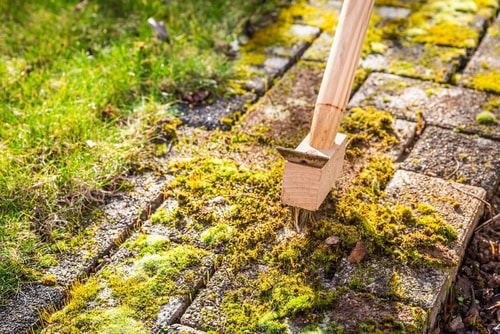
Also tackle the details surrounding them. Remove weeds between paving stones, clean around steps and straighten edging.
If using a pressure washer, check that it’s suitable for your particular paving first. Excessive pressure can damage some surfaces and dislodge jointing material.
Once clean, a previously tired patio can look surprisingly close to new.
3. Give Your Fence or Wall a Purpose
A large blank wall or tired fence dominates the view, particularly in a small garden.
Painting or staining can provide an immediate transformation, but greenery can be even more effective.
Climbing plants, trellis, wall-mounted planters and vertical gardens can turn an unattractive boundary into part of the planting scheme.
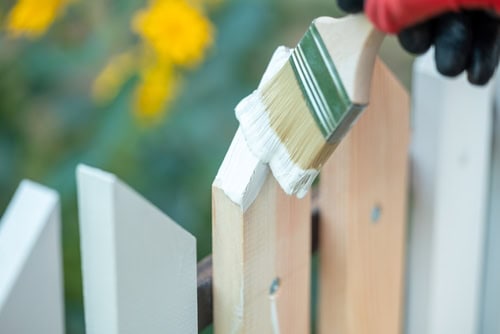
This is particularly useful when floor space is limited because you’re effectively creating another growing surface without sacrificing much of the garden.
Before attaching heavy planters or climbing structures, make sure the wall or fence is structurally sound and suitable for the additional weight.
4. Repeat Plants Instead of Buying One of Everything
Garden centres make it extremely tempting to come home with ten completely different plants.
But repetition often makes a garden look more professionally designed.
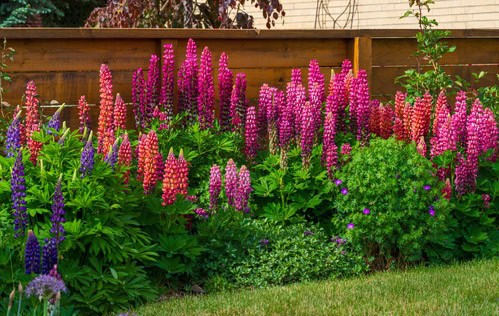
Rather than filling a border with individual specimens competing for attention, repeat selected plants in several positions. Recurring colours, foliage and shapes help connect different areas of the garden.
You don’t need dozens.
Even repeating three or four plants can make an otherwise disjointed border feel more coherent.
This is one of the simplest principles borrowed from professional garden design – and it can actually prevent you from buying plants you don’t need.
5. Use Pots to Create Instant Impact
Containers are one of the quickest ways to introduce colour and structure.
The trick is grouping them.
One lonely pot in the middle of a patio can look accidental. A collection of three or five containers of different heights looks intentional.
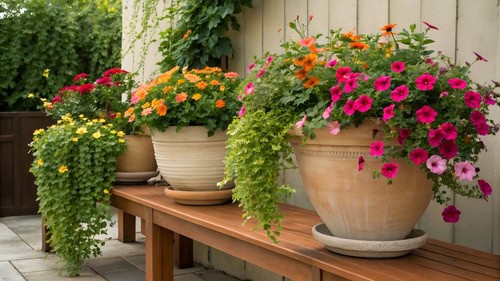
For a more sophisticated result, choose pots that share something in common – perhaps the same material, colour family or style – rather than assembling lots of completely unrelated containers.
Position them around seating areas, beside doors or at the beginning of a garden path where they’ll naturally attract attention.
Seasonal planting can then be changed without redesigning the entire garden.
6. Treat the Garden Like Another Room
Outdoor spaces tend to become more inviting when they’re given a clear purpose.
Think about how you want to use yours.
Perhaps one area becomes somewhere for morning coffee while another accommodates a dining table. A larger garden might have separate places for cooking, relaxing and entertaining.
Furniture helps define those zones.
Outdoor sofas and armchairs create a relaxed seating area, while a proper table and chairs instantly establish somewhere to eat.
There’s no need to fill every available space with furniture. Leaving breathing room around each area usually makes a garden feel larger and calmer.
If you temporarily bring indoor cushions or accessories outside, remember that most aren’t designed to withstand rain, damp or prolonged exposure to sunlight, so take them back inside afterwards.
7. Add Outdoor Cushions and Textiles
If the garden feels functional rather than inviting, textiles can change its character almost immediately.
Outdoor cushions introduce colour and make furniture more comfortable. Weather-resistant rugs can help visually define a seating or dining area.
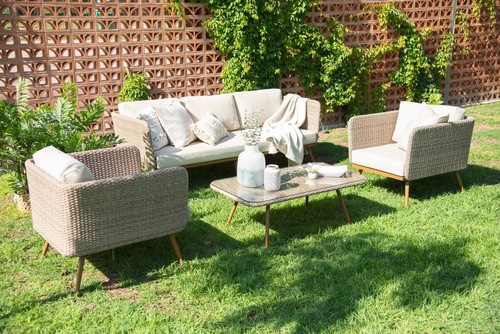
Instead of combining lots of competing patterns, choose a restrained palette and repeat it.
Creams and greens can create a natural scheme, while terracotta, rust and warm neutrals work beautifully alongside timber and foliage.
Outdoor textiles should be designed for exterior use where they’re going to remain outside, and storing them somewhere dry when not needed will help extend their life.
8. Create Shade as Part of the Design
Shade shouldn’t be an afterthought.
A parasol can create an obvious focal point around a dining table or seating area, while pergolas, awnings and appropriately positioned planting can provide more permanent solutions.
Existing trees can also create wonderful natural places to position seating.
Consider how sunlight moves across the garden during the day before deciding where your main seating area should go. The spot that’s beautifully sunny at breakfast may be uncomfortably exposed by mid-afternoon.
Good garden design isn’t simply about how an outdoor space photographs. It needs to be comfortable to use.
9. Introduce Different Heights
If everything in a garden sits at roughly the same level, the space can appear flat.
Variation creates depth.
Trees and tall shrubs provide the upper layer, medium-height planting fills the middle and lower plants soften the edges of paths and borders.
The same principle works with containers.
Put larger pots behind smaller ones, introduce a potted tree or tall grass and allow trailing plants to spill over container edges.
Drawing the eye upwards is particularly valuable in a small garden because it makes use of vertical space rather than concentrating everything at ground level.
10. Make Garden Lighting Warm and Subtle
Outdoor lighting can completely change how a garden feels after sunset.
But more isn’t necessarily better.
Instead of attempting to illuminate the entire garden, pick out selected features.
A tree lit gently from below, low lights alongside a path or warm lighting around a seating area can create considerably more atmosphere than one extremely bright security-style light flooding the entire space.
Solar lights can be useful where installing electrical lighting isn’t practical, although their performance depends on the product and how much daylight they receive.
Any permanent mains-powered outdoor electrical work should be suitable for exterior conditions and installed safely by a competent professional where required.
11. Hide the Practical Stuff
Bins, hoses, bags of compost and miscellaneous garden equipment have an extraordinary ability to become the focal point of an otherwise attractive garden.
Give them somewhere to live.
A simple bin store, storage bench, shed or screened utility area can remove a surprising amount of visual clutter.
Wall-mounted hose storage can tidy another awkward item, while gardening tools are much easier to manage when they have designated hooks or storage.
It’s not particularly glamorous garden advice, but it works.
Often a garden looks more expensive simply because you can’t see all the things required to maintain it.
12. Style the Table When You’re Entertaining
You don’t need to redesign the garden every time friends come over.
Concentrate attention where people are actually going to gather.
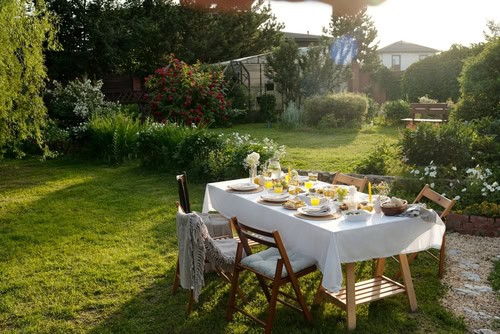
A few pots positioned around the seating area, attractive tableware, a jug of garden flowers or herbs, outdoor-safe lighting and comfortable cushions can make the space feel ready for an occasion.
Music can add atmosphere too, provided you’re considerate of neighbours.
The garden itself can remain relatively simple because you’ve created one deliberately styled focal area.
How Can I Make My Garden Look Better on a Budget?
Start with maintenance rather than shopping.
Cleaning paving, mowing and edging the lawn, removing weeds, rearranging existing pots and cutting away genuinely dead growth can make a substantial difference without costing anything.
Then look around your home before buying new garden accessories.
A suitable vase, lantern or tray may already work perfectly for temporary outdoor entertaining. Existing pots can be regrouped rather than replaced, and plants that have become crowded may sometimes be divided to create additional planting for free, where the species and season make division appropriate.
When you do spend money, concentrate on items with visual impact or long-term usefulness rather than lots of small decorative objects.
What Makes a Garden Look Expensive?
Expensive-looking gardens aren’t necessarily filled with expensive things.
They’re usually cohesive.
A limited colour palette, repeated planting, clearly defined areas, well-maintained surfaces and thoughtfully positioned furniture can make an inexpensive garden feel much more polished.
Consistency matters more than quantity.
Three matching or complementary planters will often look more considered than ten unrelated ones. Repeating the same plant through a border can look more sophisticated than buying a different variety for every available gap.
And keeping everything maintained makes perhaps the biggest difference of all.
How Do You Make a Small Garden Look Better?
Avoid trying to squeeze too much into it.
Use vertical space for planting, choose furniture appropriate to the scale of the garden and create one or two strong focal points rather than filling every corner.
Keeping the same materials and colours running through the space can also make different areas feel connected.
Most importantly, don’t assume a small garden needs small everything. One generously sized planter or statement plant can sometimes make a compact space feel more confident than dozens of tiny pots.
The Best Garden Makeovers Start With What You Already Have
It’s easy to look at an uninspiring garden and assume the solution is to replace everything.
Usually, it isn’t.
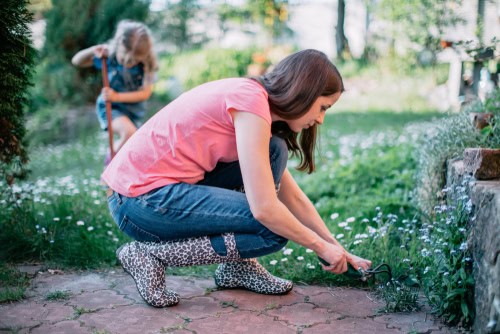
Before contemplating expensive landscaping, spend a weekend cleaning, editing, rearranging and improving what’s already there.
Define the edges. Clean the surfaces. Group the pots. Give the seating area a purpose. Hide the clutter and add a few carefully chosen finishing touches.
Then live with it for a while.
You may discover that the garden didn’t need a complete makeover after all.
It just needed a little more attention.
Opulence Magazine – the luxury magazine UK readers turn to for curated style, travel and fine living.


