

10 Clever Ways to Dry Bedding Indoors Without a Tumble Dryer
There’s something wonderfully satisfying about climbing into a bed made with freshly washed sheets. Crisp cotton, soft pillowcases and that unmistakable just-laundered feeling can make even an ordinary evening feel a little more luxurious.
Getting everything dry, however, is another matter entirely.
When the weather is wet, outdoor space is limited or you simply don’t own a tumble dryer, drying bedding indoors can become a frustrating household chore. Duvet covers seem to take forever, fitted sheets become tangled around themselves and pillowcases somehow remain damp long after everything else feels dry.
It’s particularly challenging in smaller homes, where finding enough space to hang large items can feel like an exercise in creative interior design.

Fortunately, learning how to dry bedding indoors doesn’t require expensive equipment or constantly turning up the heating.
With a few practical changes to your laundry routine, you can improve drying conditions, reduce unnecessary energy use and help prevent that unpleasant musty smell associated with damp fabrics.
Here are ten effective ways to dry bed sheets, duvet covers and pillowcases indoors without relying on a tumble dryer.
Why Does Bedding Take So Long to Dry Indoors?
Before tackling the problem, it helps to understand why bedding can be particularly difficult to dry.
Unlike smaller items of clothing, bed sheets and duvet covers contain large amounts of fabric. When these are folded, bunched together or draped over a narrow airer, moisture becomes trapped between the layers.
Drying also depends on three important factors: temperature, humidity and airflow.
Warm air can encourage moisture to evaporate from fabric, but that moisture needs somewhere to go. If a room is already humid and poorly ventilated, the drying process becomes much slower.
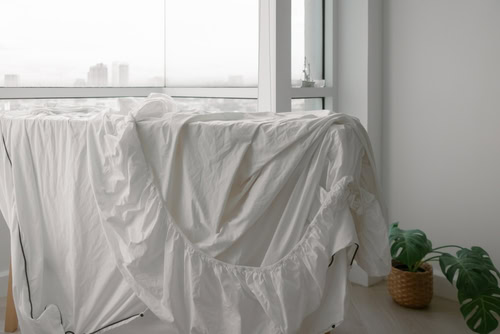
This explains why bedding can remain damp for hours in a warm but stuffy room.
Fabric choice matters, too. Thick cotton, brushed cotton and heavyweight linen can retain considerable moisture, while some lighter synthetic blends tend to dry more quickly.
The secret to successful indoor drying is therefore not simply adding more heat. It’s about removing excess water, allowing air to circulate around the material and managing the moisture released into your home.
1. Start With the Right Spin Cycle
One of the easiest ways to speed up drying happens before your bedding even leaves the washing machine.
The more water removed during the final spin, the less moisture needs to evaporate once the sheets are hanging indoors.
Check the care label on your bedding and choose an appropriate spin speed for the fabric.
Cotton sheets can often tolerate a relatively fast spin, while delicate materials may require gentler treatment.

If your bedding feels particularly wet at the end of the wash, an additional spin may help extract more water.
However, extra spinning isn’t always necessary. A sufficiently fast final spin during the original wash may achieve a similar result without another cycle.
It’s also important not to overload the washing machine. Large duvet covers need room to move, and tightly packed laundry can prevent effective washing and spinning.
Practical tip: Wash particularly bulky items separately where necessary, making sure you remain within your washing machine’s recommended load capacity.
2. Wash Bedding Early Enough to Allow Proper Drying Time
Timing can make a surprising difference to how manageable indoor laundry feels.
Starting a wash earlier in the day provides more opportunity to take advantage of available daylight, household warmth and periods when you can ventilate the room.
It also gives you time to reposition the bedding, turn larger pieces and check whether any sections remain damp.
If you wash a king-size duvet cover late in the evening, you may find yourself choosing between leaving it hanging overnight and putting away bedding that hasn’t dried properly.
Neither is particularly appealing.
Instead, plan larger laundry loads for days when you’ll have sufficient time and space to dry them.
This doesn’t mean bedding must always be washed in the morning. The important consideration is allowing enough time for the fabric to dry completely.
If your home is naturally warm and well ventilated, an afternoon wash may be perfectly practical.
For households relying on indoor airers, though, washing earlier can make the entire process easier.
3. Give Your Sheets Plenty of Space
One of the most common mistakes when drying bedding indoors is trying to fit too much fabric onto a small airer.
It’s tempting to fold a duvet cover several times and drape it over whatever space remains, but doing so restricts airflow between the layers.
Instead, spread bedding out as much as possible.
Large sheets can be hung over two parallel rails to create an open space between the fabric, while smaller items such as pillowcases can be positioned separately.
If you’re using a traditional concertina airer, avoid covering every rail with overlapping laundry.
Leave gaps wherever possible and make sure the fabric isn’t gathered into heavy folds.
A useful trick: Hang a fitted sheet with its elasticated corners arranged around the outer edges of the airer. This helps keep the middle section more open rather than allowing the sheet to collapse into a damp bundle.
For particularly large duvet covers, a sturdy drying rail or purpose-designed laundry airer may provide more space than a compact rack.
The more surface area exposed to circulating air, the better your chances of achieving even drying.
4. Choose the Right Room for Drying Bedding
Not every room in the house is equally suitable for drying laundry.
A cold spare bedroom with little ventilation may seem convenient because it keeps washing out of sight, but it can also provide poor drying conditions.
Look for a space that is reasonably warm, well ventilated and large enough to accommodate the bedding without blocking doors or walkways.

A utility room can be particularly useful, especially if it has effective ventilation.
A well-ventilated bathroom may also work, provided moisture from showers and baths has already been removed. A bathroom that remains humid after showering is unlikely to be the best choice.
Where possible, avoid placing damp bedding directly against external walls or furniture, particularly in rooms prone to condensation.
Allow enough space for air to move around the airer.
If your home has trickle vents, keep them unobstructed and use appropriate ventilation to prevent excess moisture accumulating.
According to the Energy Saving Trust, adequate ventilation plays an important role in reducing condensation, damp and mould within the home.
5. Use a Fan to Improve Air Circulation
If you’ve ever noticed how quickly laundry can dry outside on a breezy day, you’ll already understand the value of moving air.
A fan can help recreate some of that effect indoors.
Position a small fan so that it encourages air to move around the bedding rather than leaving pockets of stagnant, humid air between the layers.
The fan doesn’t need to be particularly powerful. Gentle, consistent airflow can help moisture evaporate more evenly.
A freestanding fan, for example, can be placed a safe distance from the airer and directed towards the hanging sheets.
Ensure the appliance remains on a stable surface and away from any dripping water.
Remember that a fan circulates air but doesn’t remove moisture from the room. You’ll still need adequate ventilation or another way of managing humidity.
This approach can be particularly helpful for large duvet covers, where the middle sections may remain damp long after the edges have dried.
6. Try the Dry Towel Method for Smaller Items
When you need to remove a little extra moisture from a pillowcase or smaller piece of bedding, an absorbent towel can be surprisingly useful.
The principle is simple: pressing damp fabric against a dry towel allows some of the remaining moisture to transfer into the towel.
Start by laying a clean, dry towel flat on a suitable surface.
Place the damp item on top, making sure it lies as smoothly as possible.
Roll the two layers together, then press firmly along the length of the roll.
Unroll everything and hang the bedding in a well-ventilated space to finish drying.
This technique is particularly useful for pillowcases and smaller lightweight sheets.
It is less practical for very large duvet covers, and the towel itself will need to be dried afterwards.
Practical tip: Use a genuinely dry, absorbent towel. A towel that’s already damp will be much less effective at taking up additional moisture.
7. Consider a Dehumidifier for Humid Rooms
If indoor laundry regularly takes an unusually long time to dry, high humidity may be contributing to the problem.
A dehumidifier removes moisture from the surrounding air, creating conditions that can help damp fabrics dry.
This can be particularly useful in homes where laundry must be dried indoors frequently.
For best results, position the airer in a suitable room and operate the dehumidifier according to the manufacturer’s instructions.
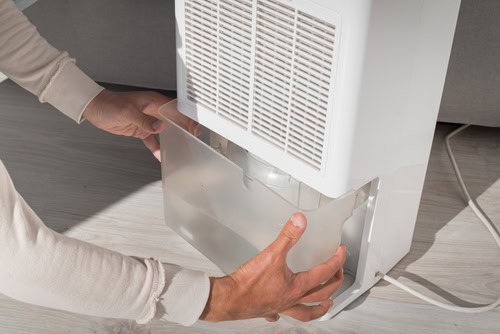
Some models include a dedicated laundry setting designed to manage moisture while clothes are drying.
A dehumidifier does use electricity, so it’s worth considering running costs, room size and how frequently you’ll use it.
For an occasional pillowcase, switching on an appliance may be unnecessary. For several large loads of bedding each week, however, a suitably sized dehumidifier may offer practical benefits.
Crucially, a dehumidifier isn’t a substitute for fresh-air ventilation. It removes water vapour but does not replace stale indoor air.
The Energy Saving Trust recommends considering dehumidifiers for rooms affected by excessive moisture while continuing to maintain appropriate ventilation.
8. Use a Heated Airer Carefully
For households without a tumble dryer, a heated clothes airer can provide another option.
These appliances use gentle electrical heating to encourage moisture to evaporate from laundry.
They can be particularly helpful when indoor temperatures are low or there is limited space for traditional drying.
However, how effectively they work depends on the design, fabric type and arrangement of the bedding.
Large sheets may still need repositioning to ensure every section dries evenly.

Some heated airers are supplied with covers that help retain warmth around the laundry. If using one, follow the manufacturer’s instructions and avoid overloading the appliance.
Make sure the airer is positioned safely, with suitable clearance around it and no obstruction to electrical connections.
The Energy Saving Trust identifies heated airers as an alternative to tumble drying, while emphasising the importance of ventilation when drying laundry indoors.
Energy Saving Trust
Safety matters: Never use a portable electric heater to dry bedding or drape fabric over one. The London Fire Brigade advises keeping heaters away from bedding and other combustible materials
9. Turn and Reposition Bedding While It Dries
Even when you’ve arranged your laundry carefully, some parts will dry faster than others.
Edges and corners exposed to moving air may feel completely dry while sections resting against an airer rail remain damp.
Turning bedding during the drying process can help.
After a few hours, check the fabric and reposition it so that previously folded or covered sections are exposed.

For duvet covers, pay particular attention to the corners, seams and areas around buttons or fastenings.
Fitted sheets can also retain moisture around their elasticated edges.
You don’t need to rearrange the entire airer constantly, but checking once or twice can help prevent stubborn damp patches.
Before putting everything away, run your hands over the fabric and inspect thicker sections carefully.
If anything still feels cool and damp, give it additional drying time.
10. Choose Bedding Fabrics That Suit Your Laundry Routine
Bedding choice isn’t only about comfort, appearance and thread count.
The fabric can also influence how easily sheets and duvet covers dry after washing.
If you regularly struggle with indoor drying, it’s worth considering fabric weight and composition before buying new bedding.
Lightweight cotton and some polycotton blends can be easier to manage than heavy, densely woven fabrics.
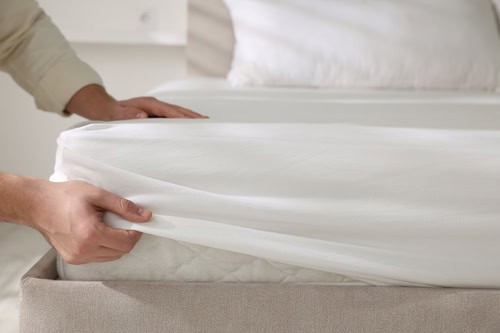
However, not all cotton bedding dries at the same rate. Fabric construction, thickness and finishing treatments can make a considerable difference.
Linen is valued for its breathable feel, but heavier linen bedding may take longer to dry than lighter alternatives.
Microfibre and certain synthetic fabrics often release moisture relatively quickly, although they may feel different against the skin and require specific washing temperatures.
Rather than choosing a material purely because it’s marketed as quick-drying, read the care instructions and consider how it fits into your household routine.
For anyone washing bedding frequently, having a second complete set can also make life easier.
You can allow one set to dry thoroughly without feeling pressured to put it straight back onto the bed.
How to Dry Bedding Indoors Without Causing Damp or Mould
Drying laundry indoors introduces additional moisture into the home.
As water evaporates from sheets and duvet covers, it enters the surrounding air. If that moisture cannot escape, it may contribute to condensation on colder surfaces such as windows and external walls.
Over time, persistently high humidity can encourage damp and mould.
This doesn’t mean you should avoid indoor drying altogether. It means managing moisture should be part of your laundry routine.
A few sensible precautions can help:
- Keep trickle vents clear and use suitable room ventilation.
- Open windows periodically when outdoor conditions allow.
- Avoid drying several large loads in a poorly ventilated room.
- Keep airers away from cold walls and allow air to circulate.
- Use extractor fans where appropriate.
- Watch for persistent condensation or musty smells.
- Investigate recurring damp rather than assuming laundry is the only cause.
Government guidance explains that inadequate ventilation can allow moisture from everyday household activities to accumulate, increasing the risk of condensation and mould.
If your home has persistent damp or visible mould, drying laundry differently may help reduce additional moisture, but underlying building or ventilation problems may also need attention.
How Long Does Bedding Take to Dry Indoors?
There is no single drying time that applies to every home.
A lightweight pillowcase hanging in a warm, well-ventilated room may dry relatively quickly, while a large cotton duvet cover folded over a small airer could take considerably longer.
Several factors affect the process:
| Factor | Effect on drying |
|---|---|
| Fabric thickness | Heavier materials generally retain more moisture |
| Spin speed | An effective spin can reduce the water left in bedding |
| Room temperature | Moderately warm conditions can encourage evaporation |
| Humidity | High humidity slows the release of moisture |
| Air circulation | Moving air helps prevent damp air collecting around fabric |
| Hanging arrangement | Overlapping layers and folds can trap moisture |
Avoid relying on the clock alone. Bedding should be completely dry before it is folded, stored or placed back on the bed.
How to Stop Bedding Smelling Musty When Drying Indoors
Few things are more disappointing than washing your bedding only to discover that it smells stale once dry.
A musty smell may develop when fabric remains damp for too long, particularly in a poorly ventilated environment.
The first step is to remove laundry promptly when the washing cycle finishes.
Leaving wet bedding inside a closed washing machine for several hours can encourage unpleasant odours.
Next, make sure the bedding has enough room to dry.
Large sheets tightly folded over an airer may remain damp in the centre even when the outer sections feel dry.
It’s also worth checking the washing machine itself.
Detergent residue, dirty seals and poorly maintained drawers can contribute to unpleasant washing smells.
Clean the machine according to the manufacturer’s instructions and avoid using more detergent than recommended.
Finally, resist the temptation to put slightly damp bedding into a wardrobe or linen cupboard.
A little extra drying time is preferable to discovering that your freshly washed sheets need laundering again.
Common Mistakes to Avoid When Drying Bedding Indoors
Sometimes, improving the results of indoor drying is simply a matter of avoiding a few familiar mistakes.
Overloading the airer: Too much fabric packed into a small area reduces circulation and can leave sections damp.
Drying laundry in an already humid bathroom: Steam from recent showers can make it harder for moisture to evaporate.
Using excessive heat: Placing bedding too close to heaters can create safety risks and may damage delicate fabrics.
Ignoring ventilation: Warm air alone isn’t enough if moisture continues to accumulate inside the room.
Folding sheets before they’re fully dry: Trapped moisture can cause unpleasant odours and contribute to damp storage conditions.
Using unnecessary additional wash or spin cycles: Extra cycles consume electricity and may increase fabric wear. Choose appropriate settings rather than automatically repeating them.
Frequently Asked Questions About Drying Bedding Indoors
What is the fastest way to dry bedding indoors without a tumble dryer?
The most effective approach is to remove as much water as the fabric safely allows during the washing machine’s spin cycle, then hang the bedding with plenty of space between the layers. Good airflow, suitable ventilation and manageable room humidity can all help speed up drying.
Can you dry a duvet cover on a clothes airer?
Yes. Ideally, spread the duvet cover across two rails so that the fabric doesn’t remain folded tightly against itself. Turn it occasionally and check the seams and corners before putting it away.
Is it better to dry bedding in a warm room or a cold room?
A moderately warm room with good ventilation will generally provide better drying conditions than a cold, damp space. However, humidity and airflow are just as important as temperature.
Should you open a window when drying bedding indoors?
Ventilation helps remove the moisture released as bedding dries. Opening a window periodically or using an appropriate ventilation system can help, depending on the weather and the ventilation arrangements in your home.
Can you dry sheets indoors overnight?
Yes, provided they’re positioned safely and the room has suitable ventilation. Avoid leaving electrical drying equipment operating unattended unless its manufacturer explicitly permits that use.
Does a dehumidifier help dry bedding faster?
A dehumidifier can improve drying conditions by removing moisture from the surrounding air. It may be particularly useful in humid rooms or homes where large amounts of laundry are regularly dried indoors.
Why do my sheets still feel damp after several hours?
The fabric may be too tightly folded, the room may have high humidity or there may be insufficient airflow. Thick seams and elasticated corners can also retain moisture after the main sections have dried.
Can drying bedding indoors cause mould?
Indoor drying adds moisture to the air, which can contribute to condensation and mould if ventilation is inadequate. Managing humidity and addressing any persistent damp problems are important for protecting the home.
Is it cheaper to use a heated airer or a tumble dryer?
Running costs depend on the appliance’s power consumption, how long it operates and your electricity tariff. A heated airer may use less power at any given moment but can take longer to dry bedding. Comparing the total energy consumed per load gives a more meaningful picture than comparing wattage alone.
Fresh Bedding Without the Tumble Dryer
Drying bedding indoors doesn’t have to involve draping sheets over every available piece of furniture or waiting endlessly for a duvet cover to lose its final patches of moisture.
The most effective solutions are often straightforward: use an appropriate spin cycle, create enough space for air to move around the fabric and keep the surrounding room properly ventilated.
For households regularly drying large loads indoors, a fan, heated airer or dehumidifier may also be useful, depending on the conditions in the home.
It’s equally important to avoid rushing the final stage. Completely dry bedding is more comfortable to sleep in, easier to store and less likely to develop unpleasant odours.
A little planning can make the entire laundry routine feel considerably less demanding.
And when the reward is a beautifully made bed with crisp, fresh sheets, the extra care is well worth it.
Explore more with Opulence, your luxury magazine in the UK for design, travel and sophisticated living.


