

The Modern Guide to Wearing a Watch With Style
A good watch can be one of the most versatile accessories in a man’s wardrobe. Whether you own a mechanical dress watch, a vintage timepiece, a contemporary sports watch or something inexpensive that simply looks great, knowing how to wear a watch well is largely about proportion, practicality and personal style.
Traditional watch etiquette still has its place, but menswear has become considerably less rigid. Sports watches appear with tailoring, leather straps are no longer reserved exclusively for formal occasions and there is certainly no requirement to own a different watch for every outfit.
Some principles, however, remain useful.
From choosing the correct size for your wrist to coordinating a watch with tailoring, these are the watch-wearing guidelines actually worth knowing.
1. Wear Your Watch on the Wrist That Feels Most Natural
One of the most frequently asked questions about how to wear a watch is whether it belongs on the left or right wrist.
Traditionally, watches are worn on the non-dominant wrist. For a right-handed person, that usually means wearing a watch on the left.
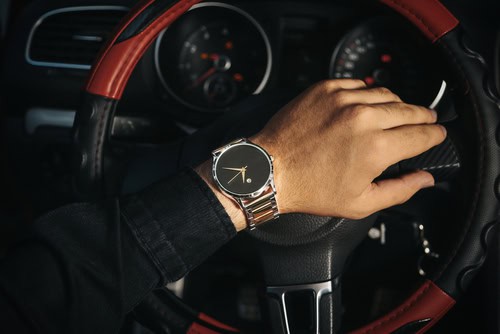
There is a practical reason for this. Your dominant hand generally performs more tasks, so wearing a watch on the opposite wrist can make it less intrusive and potentially reduce knocks and scratches.
It can also make operating the crown easier on watches designed with it on the right-hand side of the case.
But this is convention rather than a rule.
If wearing your watch on your dominant wrist is more comfortable, there is nothing incorrect about doing so. Comfort should ultimately decide.
2. Get the Fit Right
Even an exceptional watch can look awkward if the bracelet or strap doesn’t fit properly.
A watch should generally sit securely enough that it doesn’t continually rotate around your wrist, but it shouldn’t be so tight that it digs noticeably into the skin.
With a bracelet, adjusting individual links or the clasp can make a considerable difference. Leather, rubber and fabric straps naturally offer greater day-to-day adjustment.
Where the watch sits matters too. Wearing it around or just above the wrist bone usually provides a comfortable position while allowing a shirt cuff or jacket sleeve to move naturally.
A correctly fitted watch should feel like part of what you’re wearing rather than something you are constantly repositioning.
3. Choose a Case Size That Works With Your Wrist
Watch proportions are more important than following trends.
Large watches have had periods of enormous popularity, while smaller and vintage-inspired case sizes have subsequently returned to favour. Neither automatically makes a watch stylish.
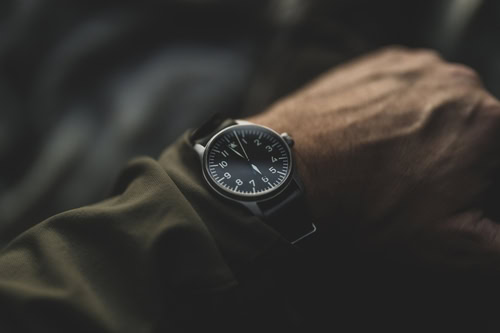
Instead, consider how the entire watch sits on your wrist.
Case diameter is only one measurement. Lug-to-lug length, case thickness, bezel design and even dial proportions can dramatically change how large a watch appears when worn.
Ideally, the lugs should sit comfortably within the width of your wrist rather than projecting noticeably beyond it.
Try watches on whenever possible rather than assuming that a particular case diameter will suit you.
4. Match the Watch to the Occasion — Without Being Too Rigid
Traditional watch etiquette divided watches neatly into categories.
Dress watches belonged with formal clothing. Dive and sports watches were intended for casual wear. Tool watches were worn for the activities they were designed to perform.
Modern style is much more flexible.
A restrained sports watch can look excellent with a suit, while an elegant watch can work equally well with jeans and a shirt. The overall design, dimensions and finishing often matter more than the category printed on the specification sheet.
For particularly formal occasions, however, simplicity remains a reliable approach. A relatively slim watch that slips comfortably beneath a shirt cuff will usually complement tailoring without dominating it.
The more formal the outfit, the less the watch generally needs to shout.
5. Consider Your Watch Strap as Part of the Outfit
Changing the strap can completely alter the personality of a watch.
A refined leather strap can make a watch feel smarter, while rubber creates a sportier appearance. A metal bracelet is exceptionally versatile, and fabric straps can make even relatively traditional watches feel more relaxed.
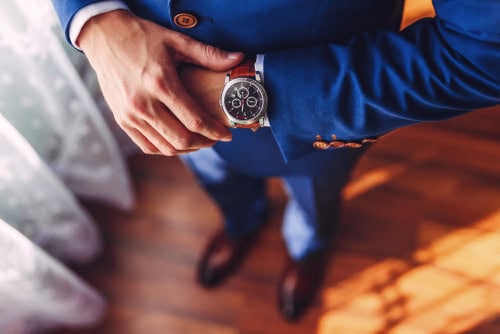
Colour provides another opportunity to connect the watch with what you’re wearing.
You don’t need to achieve a perfect match between your shoes, belt and watch strap. Instead, aim for a sense of cohesion. Brown leather, for example, naturally complements many earthy and neutral outfits, while black leather can create a cleaner, more formal effect.
If you own one good watch but want more versatility, investing in several suitable straps can be more useful than buying multiple watches.
Before changing one, check that the strap dimensions and fitting are appropriate for your watch.
6. Coordinate Metals Rather Than Obsessively Matching Them
The traditional menswear rule says that the metal of your watch should match every other metal you’re wearing.
It can certainly create a polished look.
A steel watch can sit naturally alongside silver-toned cufflinks, while a yellow-gold watch can echo gold jewellery or other warm metallic details.
But contemporary styling allows considerably more freedom.
Mixed metals can work perfectly well, particularly when they appear deliberate rather than accidental. Two-tone watches themselves demonstrate how naturally different metals can coexist.
If you prefer a classic appearance, keeping metals broadly consistent remains an easy styling shortcut. If your style is more contemporary, don’t feel obliged to match every buckle, ring and cufflink precisely.
7. Let the Watch Complement Your Outfit Rather Than Dominate It
Luxury watches can be beautiful objects, but they don’t need to become the entire outfit.
Consider visual balance.
A complicated or highly decorative watch can work particularly well with relatively simple clothing. Conversely, understated watches often complement more expressive tailoring, prints and textures.
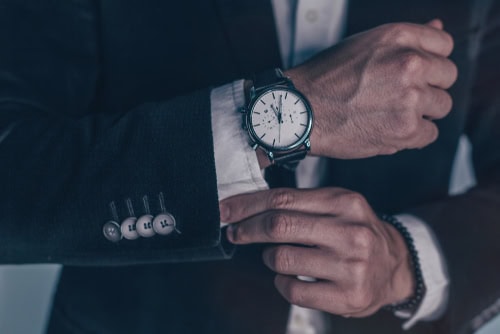
The same principle applies to jewellery.
If you’re wearing rings, bracelets and a watch together, consider how they look as a group rather than assessing every item individually.
Diamond-set and highly embellished watches are ultimately a matter of personal style rather than a breach of etiquette. If maximalism is genuinely part of your look, there is no reason to pretend otherwise.
The important distinction is between deliberately making a statement and accidentally creating visual clutter.
8. Don’t Keep Checking Your Watch in Company
One piece of traditional watch etiquette remains remarkably relevant.
Repeatedly looking at your watch while somebody is speaking to you can suggest that you’re bored, impatient or waiting to leave — regardless of your actual intention.
The same principle now applies to repeatedly checking a phone.
If you genuinely need to monitor the time during a meeting, dinner or event, a discreet glance is preferable to repeatedly raising your wrist.
Ironically, one advantage of wearing a traditional watch is that checking the time can be considerably less distracting than reaching for a smartphone.
9. Respect Other People’s Watches
Watch enthusiasts tend to notice what other people are wearing, and discussing watches can be an easy conversation starter.
A simple compliment or question about an interesting watch is perfectly appropriate.

Handling it without permission isn’t.
Watches can have considerable financial or sentimental value, and polished surfaces can easily collect fingerprints or marks. If somebody wants to remove their watch and let you examine it, allow them to offer.
This is particularly important with vintage watches, where components can be more delicate than they appear.
Admire first. Ask before touching.
10. Choose a Watch You Actually Enjoy Wearing
It is easy to become preoccupied with what you’re supposedly meant to wear.
The reality is that the best watch for you is one that suits your lifestyle, budget and personal taste.
A watch doesn’t need to be expensive to be stylish, and an expensive watch doesn’t automatically improve an outfit.
Think about when you’ll actually wear it.
If you spend most of your time dressed casually, an ultra-formal dress watch may receive little wrist time. If you regularly wear tailoring, a huge sports watch may feel cumbersome. Someone who swims frequently will have different practical requirements from someone primarily buying a watch for dinners and events.
Buy for your real life rather than an imaginary wardrobe.
Should Your Watch Match Your Shoes and Belt?
Not exactly.
Matching a leather watch strap with your shoes and belt can produce a particularly cohesive formal outfit, but the colours don’t need to be identical.
Think in terms of colour families.
A brown watch strap can work with several shades of brown footwear, while a black strap is an easy companion for black shoes and a black belt.
Metal bracelets are even simpler because they work with an enormous range of colours and materials.
For casual outfits, there is considerably more freedom.
Can You Wear a Sports Watch With a Suit?
Yes.
The old distinction between dress watches and sports watches has softened considerably, and many sports watches now appear regularly alongside tailoring.
Proportion is the important consideration.
A very thick watch that prevents a shirt cuff from sitting properly can look awkward, whereas a relatively streamlined sports watch can work extremely well.
For black tie or highly formal occasions, an understated dress watch remains the more traditional option. Whether you follow that convention is ultimately a matter of personal style.
Should a Watch Be Visible Under a Shirt Cuff?
A watch doesn’t need to be permanently displayed.

With a well-fitting shirt and jacket, it will often be partly concealed when your arm is relaxed and become visible naturally as you move.
There is no need to deliberately pull back your cuff to showcase it.
If a watch is so large that your shirt sleeve cannot comfortably pass over it, that may be a sign that its proportions aren’t ideal for that particular outfit.
How Many Watches Does a Man Need?
There is no minimum number.
One versatile watch can cover almost everything if its design works with your lifestyle.
Someone interested in watches might eventually build a collection around different purposes — perhaps a dress watch, everyday watch and sports or dive watch — but that’s an enthusiast’s choice rather than a wardrobe requirement.
For most people, versatility and enjoyment are more important than quantity.
How to Build a Versatile Watch Wardrobe
If you do want more than one watch, avoid buying several pieces that perform essentially the same job.
An everyday watch on a bracelet can provide a versatile starting point. A slimmer or more restrained watch can cover smarter occasions, while a robust sports watch may make sense for holidays, exercise and outdoor activities.
Alternatively, one watch with interchangeable straps can create several different looks without requiring an entire collection.
What matters is that every watch has a reason to be worn.
The Modern Rules of Wearing a Watch
The most useful watch rules aren’t really about telling men exactly what they can and cannot wear.
They’re about proportion, context and consideration.
Wear a watch on whichever wrist feels comfortable. Make sure it fits properly. Consider its proportions alongside your clothes. Treat valuable watches with appropriate care, respect other people’s property and avoid obsessively checking the time when someone is talking to you.
Beyond that, personal style should have room to breathe.
A great watch should look as though it belongs on your wrist — not as though you’ve spent the morning worrying about whether you’ve broken a rule.


