
10 Health Benefits of Houseplants – The Best Plants for Your Home
10 Houseplants That Offer Surprising Health Benefits
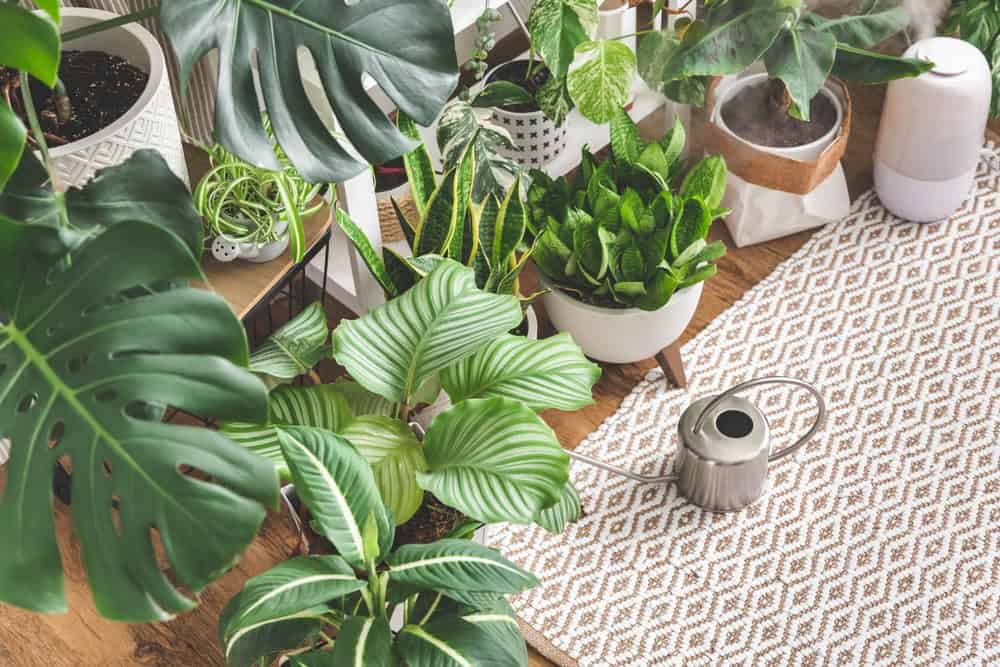
Houseplants can transform a room remarkably quickly. A bare corner suddenly looks intentional, a home office feels less clinical and even the smallest flat can gain a connection with the outdoors.
But the health benefits of houseplants may extend beyond simply making our homes look better.
Research into indoor plants has explored their relationship with stress, mood, attention and our perception of indoor environments. Caring for something living can also provide a satisfying daily ritual, while herbs and edible plants have the rather obvious advantage of producing something we can actually eat.
There has, however, been plenty of exaggeration.
A spider plant isn’t going to detox your entire bedroom overnight, and a snake plant isn’t an alternative to opening a window. Some of the most frequently repeated claims about houseplants come from laboratory studies that don’t accurately represent conditions inside a normal home.
So what can indoor plants realistically offer?
Here are ten houseplants worth considering — and the genuine reasons they could be good additions to your home.
1. Lavender – For Creating a Calmer Bedroom
Lavender has been associated with relaxation for generations, and its distinctive fragrance has also attracted scientific interest.
Research has investigated lavender aroma in relation to relaxation, anxiety and sleep, although that doesn’t mean simply putting a lavender plant beside your bed will cure insomnia.

Its greatest advantage may be far simpler.
Lavender can help create an environment that feels restful. Its fragrance and appearance work particularly well in bedrooms and quiet areas where you’re deliberately trying to reduce stimulation towards the end of the day.
There’s one catch: lavender isn’t really a classic low-light houseplant.
It loves sunshine and needs excellent drainage, so give it the brightest windowsill you have. If your bedroom resembles a cave, choose something else.
Best for: Sunny bedroom windowsills and relaxation spaces.
Care: Plenty of direct sunlight, well-draining soil and careful watering.
2. Snake Plant – For People Who Usually Kill Houseplants
The snake plant (Dracaena trifasciata) is practically indestructible, which is a health benefit of sorts if repeatedly murdering expensive houseplants causes you stress.
Its architectural upright leaves make it particularly good for bedrooms, home offices and smaller rooms where you don’t want a sprawling plant taking over.
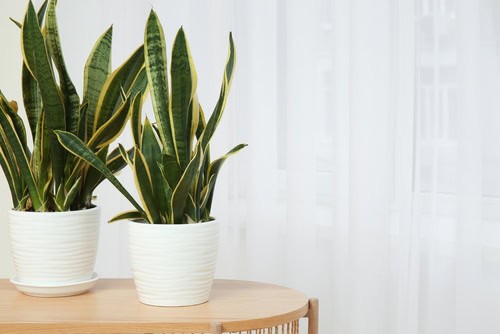
Snake plants use a type of photosynthesis known as CAM, which involves taking in carbon dioxide predominantly at night. This has helped fuel claims that they dramatically increase bedroom oxygen while you sleep.
In reality, one little pot isn’t going to meaningfully alter the oxygen concentration of your bedroom.
Its real advantages are that it’s attractive, forgiving and allows even reluctant gardeners to introduce greenery into their homes without creating another demanding job.
Best for: Beginners, bedrooms and low-maintenance homes.
Care: Allow the compost to dry between waterings. It tolerates lower light but grows better with brighter indirect light.
3. Aloe Vera – A Useful Plant to Have Around
Aloe vera earns its place for a much more practical reason.
The clear gel inside its fleshy leaves has a long history of topical use, particularly for soothing minor skin irritation and mild burns. Aloe-based products are widely used in skincare for precisely this reason.
That doesn’t mean you should start treating serious burns with the plant from your windowsill, and aloe shouldn’t be eaten casually.

But as houseplants go, it’s one of the few that has a potential practical use beyond looking attractive.
It’s also a succulent, making it relatively undemanding once you understand its greatest enemy: too much water.
Give it a bright position and let the soil dry out properly between drinks.
Best for: Sunny kitchens, bathrooms with good light and bright bedrooms.
Care: Bright light, free-draining compost and infrequent watering.
4. Rosemary – For Fragrance, Cooking and a Little Mental Stimulation
Why buy a purely decorative plant when you can eat it?
Rosemary makes a fantastic windowsill plant if you can give it enough sunlight. Brush your hand against the leaves and you’ll immediately release its unmistakable woody fragrance.

Studies into rosemary aroma have explored possible effects on aspects of cognition and alertness, although research remains limited and keeping a rosemary plant isn’t a medical treatment for memory problems.
Its unquestionable benefit is culinary.
You can snip fresh rosemary straight into roast potatoes, chicken, focaccia, soups and sauces, making it one of the most useful plants you can grow indoors.
Fresh herbs also make healthy home cooking considerably more interesting without relying on excessive salt.
Best for: Kitchen windowsills.
Care: Lots of light, good drainage and don’t leave the roots permanently wet.
5. Peace Lily – For Bringing Nature Into Your Workspace
Peace lilies (Spathiphyllum) have glossy foliage and distinctive white flowers, making them an easy way to introduce a substantial amount of greenery without needing a conservatory.
They’re particularly suited to home offices and living spaces with bright but indirect light.
The health argument here isn’t that a peace lily will filter all the pollution out of your office.
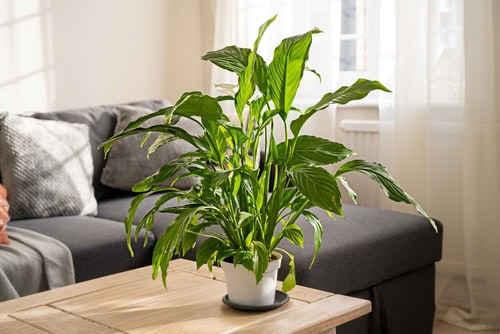
Instead, it’s about biophilic design — the idea that incorporating elements of nature into our built environment may positively influence how we experience a space.
Research involving indoor plants has explored possible effects on psychological stress, mood and attention. Results vary between studies, but there is enough evidence to make our relationship with indoor greenery an interesting area of research.
And even without making a medical claim, most of us can appreciate that staring at something green is preferable to staring at another charging cable.
Best for: Home offices and living rooms.
Care: Bright indirect light and consistently lightly moist soil without waterlogging.
6. Spider Plant – An Easy Way to Add More Greenery
Spider plants have been popular houseplants for decades, and for good reason.
They’re forgiving, fast-growing and produce baby plantlets that can be propagated with very little effort.

The spider plant is also one of the species involved in the famous NASA research that led to the widespread idea that houseplants are powerful indoor air purifiers.
Here’s the less exciting reality.
Plants can remove certain volatile organic compounds under controlled laboratory conditions. But research examining what happens in actual buildings has concluded that the effect of ordinary potted plants is far too small to compete with normal ventilation and air exchange.
So buy a spider plant because it’s cheerful, resilient and provides plenty of greenery.
Open the window because you want ventilation.
Best for: Beginners, shelves and hanging planters.
Care: Bright indirect light is ideal, although it tolerates less-than-perfect conditions.
7. Mint – For Fresh Flavour and an Instant Sensory Hit
Mint may not be the first thing that comes to mind when you hear “houseplant“, but it’s one of the most useful plants to keep on a bright kitchen windowsill.

Its fresh aroma is released whenever the leaves are touched, and you can use them in tea, salads, yoghurt dressings, sauces and cold drinks.
Growing herbs at home can also encourage you to use them more frequently.
Mint has a reputation for being almost aggressively enthusiastic outdoors, where it can spread rapidly through a garden. Keeping it contained in a pot solves that problem rather neatly.
And unlike some supposedly health-giving houseplants, the benefit is wonderfully straightforward: you grow it and then you eat it.
Best for: Kitchens and sunny windowsills.
Care: Bright light and regular watering. Mint prefers its soil not to dry out completely.
8. Boston Fern – For Naturally Increasing Humidity Around the Plant
Boston ferns (Nephrolepis exaltata) love moisture.
Like other plants, they release water vapour through a process called transpiration, meaning a collection of leafy plants can have a localised effect on humidity.
That’s different from claiming one fern will humidify your entire house.
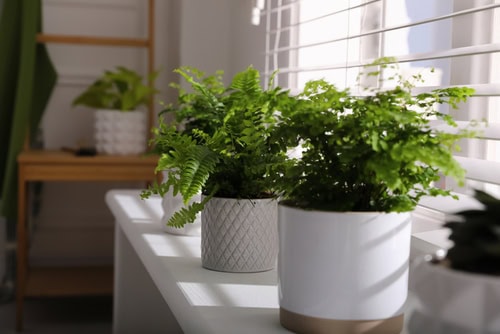
In a centrally heated room that becomes extremely dry during winter, a large collection of plants may contribute some moisture to their immediate surroundings — although anyone needing substantial humidity control would be better served by measuring the room and using an appropriate humidifier.
The Boston fern nevertheless provides masses of soft green foliage and works particularly well in bathrooms where conditions are naturally more humid.
Best for: Bright bathrooms and humid rooms.
Care: Indirect light, relatively high humidity and compost that doesn’t completely dry out.
9. Jasmine – For a Beautifully Fragrant Evening Space
Jasmine is another plant commonly associated with sleep because of its fragrance.
Research into aromas and sleep is interesting, but there’s a substantial leap between studying exposure to a fragrance and claiming that a potted jasmine plant is a natural sleeping tablet.
That’s not a leap we need to make.
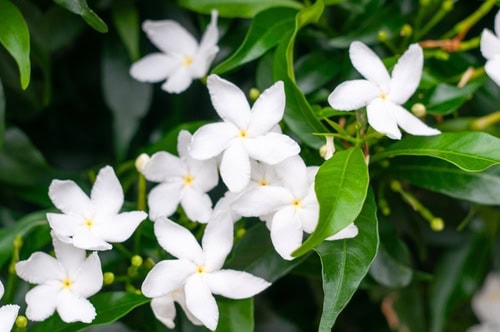
A flowering jasmine plant can fill a room with fragrance and help create the sensory atmosphere you associate with winding down in the evening.
That can make it a lovely choice for a bedroom, reading corner or other relaxation space — provided the room offers enough light.
Indoor jasmine also produces beautiful small flowers, giving it decorative appeal even before fragrance enters the equation.
Best for: Bright bedrooms and relaxation spaces.
Care: Plenty of bright light and appropriate watering; exact requirements depend on the jasmine variety.
10. Basil – Because Healthy Houseplants Can Be Dinner
Our final choice isn’t exotic, rare or surrounded by dramatic wellness claims.
It’s basil.
And that’s exactly why we like it.
A healthy basil plant on the kitchen windowsill provides fresh leaves for tomato salads, pasta sauces, pesto, soups, pizzas and dozens of other meals.

Herbs are an easy way to add huge amounts of flavour to food, and having them growing within arm’s reach makes them much easier to use.
There can also be something satisfying about eating food you’ve grown yourself, even when your entire harvest consists of six basil leaves from a pot beside the toaster.
Best for: Kitchens.
Care: Give basil plenty of light and warmth and water it regularly without leaving it waterlogged.
Can Houseplants Really Purify the Air?
This deserves its own section because it’s probably the biggest misconception surrounding the health benefits of houseplants.
You’ve probably seen lists claiming certain plants remove benzene, formaldehyde and other pollutants from indoor air.
There is some truth behind the origin of those claims.
Laboratory experiments — including well-known NASA research — demonstrated that plants could remove certain volatile organic compounds from air inside sealed experimental chambers.
A house isn’t a sealed laboratory chamber.
Later analysis of the research found that you’d need an enormous number of plants to achieve removal rates comparable with the air exchange already occurring in normal buildings.
So although plants interact with their environment, a normal collection of houseplants shouldn’t be relied upon as an air-purification system.
For improving indoor air quality, appropriate ventilation, dealing with sources of pollution and maintaining the home properly are far more important.
Keep the plants anyway.
They’re considerably prettier than an extractor fan.
Can Houseplants Help With Stress and Wellbeing?
This is where the research becomes more interesting.
Studies have explored whether interacting with indoor plants, viewing greenery and introducing plants into work or living environments can influence stress, attention, mood and perceived wellbeing.
There are encouraging findings, although the evidence isn’t strong enough to claim that buying a monstera is a treatment for anxiety or depression.
What plants can do is alter the environment around us.
They introduce colour and texture. Looking after them creates a routine. New growth provides a small sense of reward. Gardening and plant care can also pull our attention away from screens and towards a simple physical task.
None of those things requires an extravagant health claim to be worthwhile.
Can Plants Help You Sleep Better?
There isn’t convincing evidence that placing a particular houseplant beside your bed will directly make you sleep better.
Plants such as lavender and jasmine are often recommended because their fragrances are associated with relaxation, and research has investigated some aromas in relation to sleep.
But fragrance research shouldn’t be translated into “this plant cures insomnia”.
The bigger benefit may come from creating a bedroom that feels calm, comfortable and conducive to winding down.
Plants can certainly contribute to that.
For better sleep, however, the fundamentals remain far more important: a comfortable bedroom temperature, darkness, sensible caffeine consumption, a consistent routine and limiting things that keep you awake.
Sadly, the peace lily cannot confiscate your phone at midnight.
Are Houseplants Good for Mental Health?
It’s more accurate to say that indoor plants may support wellbeing than to describe them as a mental-health treatment.
Researchers have investigated plants and nature exposure in relation to stress and psychological wellbeing, and there’s growing interest in biophilic design in homes, workplaces and healthcare settings.
For some people, tending plants is relaxing and rewarding. For others, keeping a fern alive is simply another source of responsibility.
Choose plants because you enjoy having them.
That’s reason enough.
A Quick Guide to Choosing the Right Healthy Houseplant
| What you want | Plant to try |
|---|---|
| A calming bedroom atmosphere | Lavender or jasmine |
| Something almost impossible to kill | Snake plant |
| A practical succulent | Aloe vera |
| Fresh herbs for cooking | Basil or rosemary |
| Something for a home office | Peace lily |
| An easy trailing plant | Spider plant |
| A kitchen herb for drinks and meals | Mint |
| Greenery for a humid bathroom | Boston fern |
| Lots of fragrance | Jasmine |
| An edible windowsill plant | Basil |
A Few Houseplant Safety Rules
“Natural” doesn’t automatically mean safe.
Some popular houseplants can be toxic if eaten, which matters particularly in homes with young children or pets. Peace lilies, for example, contain calcium oxalate crystals and shouldn’t be treated as edible plants.
Plant sap can also irritate the skin in some people.
If you have pets, check the toxicity of the exact plant species before bringing it home and position potentially harmful plants safely out of reach.
And don’t eat a houseplant unless you know it’s an edible species intended for consumption.
Your basil is dinner.
Your peace lily isn’t.
So, Are Houseplants Actually Good for You?
Potentially — just not always for the reasons social media would have you believe.
The strongest argument for filling your home with plants isn’t that they’ll detox the air, flood your bedroom with oxygen or cure a bad night’s sleep.
It’s much simpler.
Houseplants bring nature into spaces where we spend an enormous amount of our lives. They can make rooms feel more pleasant, provide something rewarding to care for and, in the case of edible plants, give us fresh ingredients to use in the kitchen.
Some fragrant varieties can contribute to a relaxing environment, while research continues to explore the relationship between indoor greenery, stress and wellbeing.
So don’t buy a houseplant because somebody has promised it’ll transform your health.
Buy one because you love it, put it somewhere it’ll thrive and enjoy having a little more green in your home.
The health benefits can be a rather lovely bonus.


