
10 Reasons Puerto Rico Should Be on Your Travel List
There are destinations you visit for the beaches, others you choose for the food and some where history and culture provide the main attraction.
Puerto Rico manages to combine all three — and then adds rainforest, mountains, colourful colonial streets, tiny offshore islands and water that quite literally glows after dark.
Sitting between the Atlantic Ocean and Caribbean Sea, this compact Caribbean island offers far more variety than you might expect. You could spend the morning wandering cobbled streets in Old San Juan, the afternoon on a palm-fringed beach and the evening working your way through one of the Caribbean’s most interesting food scenes.
And while San Juan makes an obvious starting point, it would be a mistake to assume the capital tells the whole story.
From Vieques and Culebra to the mountains of the interior and surf towns of the west coast, here are ten reasons Puerto Rico deserves a place on your travel list.
1. The Beaches Are Every Bit as Good as You Hope
Let’s begin with the obvious one.
Puerto Rico has the kind of Caribbean beaches that make you question why you packed anything other than swimwear.
But there isn’t one single Puerto Rican beach experience.
Around San Juan, stretches such as Condado and Isla Verde combine sand and sea with the convenience of restaurants, bars and hotels nearby.
Travel further afield and the atmosphere changes considerably.

Culebra is known for spectacular beaches and clear water, while Vieques offers quieter stretches of coastline with a distinctly away-from-it-all feel. On the west coast, Rincón combines beaches with one of the island’s best-known surfing scenes.
That variety means Puerto Rico works equally well for travellers who want a resort-style beach holiday and those who’d rather hire a car and hunt for somewhere quieter.
2. Puerto Rican Food Is a Reason to Travel in Its Own Right
Puerto Rico deserves considerably more attention as a food destination.
Its cuisine has developed through generations of Indigenous Taíno, Spanish, African and wider Caribbean influence, creating food with an identity very much of its own.
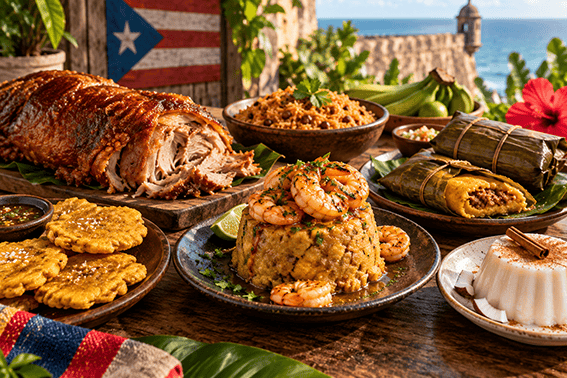
One of the dishes you’ll encounter repeatedly is mofongo, traditionally made using fried green plantain that’s mashed with garlic and other ingredients and often served alongside meat, seafood or broth.
Then there’s lechón, slow-roasted pork with beautifully crisp skin; tostones, twice-fried plantain; arroz con gandules, rice with pigeon peas; and pasteles, parcels traditionally made with a plantain or root-vegetable mixture and filled before being wrapped in banana leaves.
And don’t leave without trying something sweet. Puerto Rican desserts include tembleque, a coconut pudding traditionally flavoured with cinnamon.
The exciting part is that traditional cooking isn’t confined to nostalgic establishments. A new generation of chefs is taking Puerto Rican ingredients and culinary traditions into ambitious contemporary restaurants.
San Juan’s dining scene has attracted substantial international attention, while Puerto Rican chefs and restaurants have appeared repeatedly in James Beard recognition in recent years.
Come hungry.
3. Old San Juan Is Made for Wandering
You don’t need much of an itinerary for your first few hours in Old San Juan.
Walking is the itinerary.
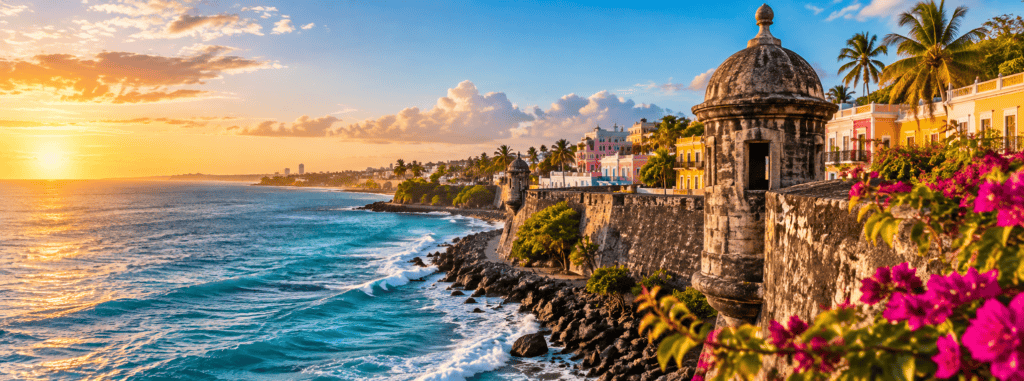
The historic district is a wonderfully photogenic collection of brightly coloured buildings, balconies, plazas and cobbled streets overlooking the water.
It is somewhere to explore slowly rather than racing between landmarks.
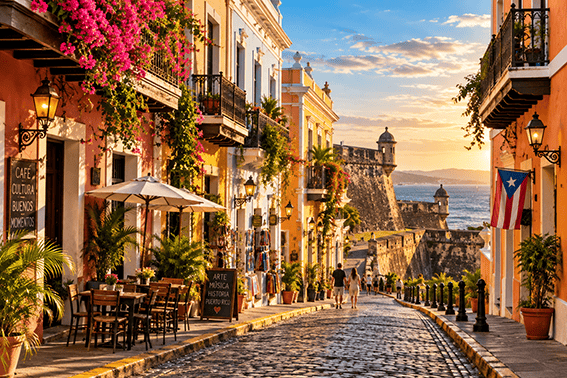
Stop for coffee. Wander into shops and galleries. Find a bar. Have lunch somewhere that catches your eye. Then carry on until you reach the huge fortifications that remind you just how strategically important this small corner of the Caribbean once was.
The contrast is part of its appeal: enormous centuries-old defensive structures sit alongside streets full of restaurants, music and everyday life.
Stay into the evening if you can. Once the strongest heat of the day subsides, San Juan takes on an entirely different atmosphere.
4. You Can Walk Through a Tropical Rainforest
Puerto Rico isn’t simply a fly-and-flop beach destination.
Head inland and the scenery changes dramatically.
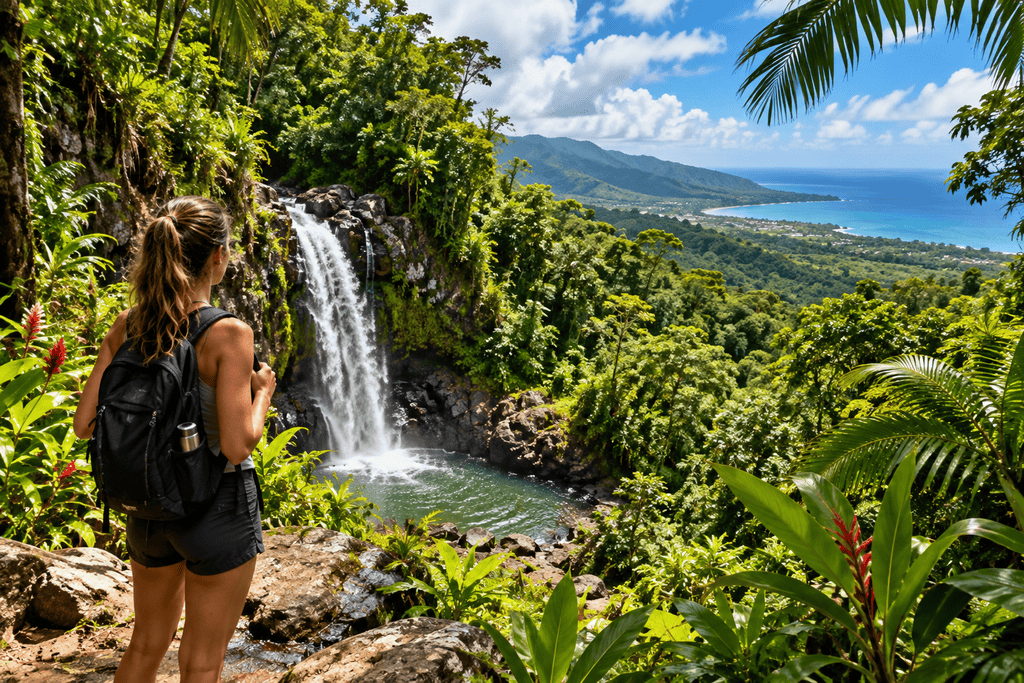
El Yunque National Forest is one of the island’s great natural attractions, with dense vegetation, waterfalls, mountain scenery and hiking opportunities offering a completely different experience from the coast.
It’s the kind of day that makes a Puerto Rico itinerary feel much more adventurous: swapping your sandals for walking shoes in the morning before returning to the coast later in the day.
And because Puerto Rico is relatively compact, you don’t necessarily have to choose between rainforest and beach.
You can have both.
5. The Water Can Glow in the Dark
This one sounds suspiciously like something invented for social media.
It isn’t.
Puerto Rico has three well-known bioluminescent environments: Mosquito Bay on Vieques, Laguna Grande near Fajardo and La Parguera in Lajas. The phenomenon is caused by concentrations of microscopic organisms called dinoflagellates, which emit light when the water around them is disturbed.
The result can be extraordinary.
Movement through dark water produces tiny flashes of blue-green light, creating an effect rather like stars appearing beneath the surface.
Mosquito Bay on Vieques is particularly renowned for its bioluminescence and is regarded as one of the brightest examples in the world.
Conditions matter, so anyone planning a bio-bay experience should research timing and reputable operators before travelling rather than assuming every evening will produce exactly the same display.
6. Vieques and Culebra Feel Like Another Escape Within Your Holiday
One island holiday can become several.
Vieques and Culebra sit off Puerto Rico’s eastern coast and provide an enticing reason to extend a trip beyond the main island.
Culebra is particularly attractive to travellers whose priorities are beaches, snorkelling and a slower pace.
Vieques combines beautiful coastline with its famous bioluminescent bay and a more laid-back character.
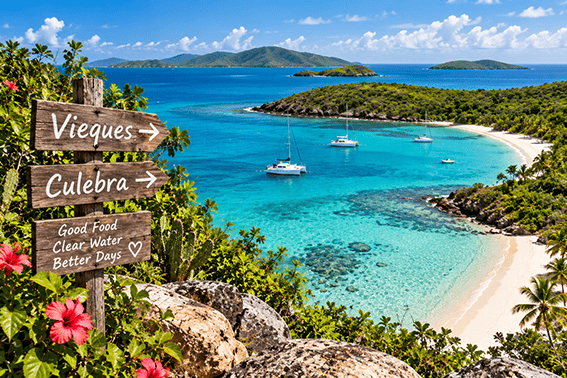
Including one of the smaller islands can completely change the rhythm of a Puerto Rico holiday. Spend a few energetic days eating and exploring in San Juan, then slow everything down by heading offshore.
It gives you the city-and-island combination without needing to build an entire multi-country Caribbean itinerary.
7. The Island Has a Serious Cocktail Culture
Puerto Rico’s relationship with rum alone would be enough to make drinks part of the travel experience.
But the modern cocktail scene goes well beyond ordering a piña colada by the pool.
San Juan has developed an increasingly interesting collection of cocktail bars where bartenders use tropical fruits, local ingredients, rum and wider Latin American influences in more inventive ways.
That reputation now extends internationally. Identidad Cocktail Bar in San Juan won the James Beard Foundation’s Best New Bar award in 2025 — an indication of how seriously Puerto Rico’s contemporary drinks scene is being taken.
The result is a nightlife scene that can be as sophisticated or relaxed as you want it to be.
Start with rooftop drinks as the sun goes down, find somewhere for dinner and then explore the bars afterwards.
8. There’s Much More Beyond San Juan
San Juan deserves several days, particularly on a first visit, but don’t let it become your entire Puerto Rican experience.
Rincón on the west coast has become synonymous with surfing, beaches and spectacular sunsets.
The south has its own architecture, food and character, while smaller towns and mountain communities reveal a much greener side of the island.
Road-tripping also allows you to discover the places that don’t necessarily appear on a first-time visitor’s checklist: roadside food stalls, quieter beaches, local bakeries and restaurants, viewpoints and small towns.
If time allows, build a Puerto Rico itinerary around different bases rather than treating everything outside San Juan as a day trip.
9. You Can Build Several Different Holidays Into One Trip
This might be Puerto Rico’s biggest advantage.
It doesn’t force you to choose one style of holiday.
Want luxury? Spend a few nights in a polished San Juan hotel and book some of the city’s best restaurants.
Want adventure? Hike, surf, kayak and explore the rainforest.
Want a romantic Caribbean escape? Head for a smaller beachside hotel and spend several days doing very little.
Travelling primarily for food? Build an itinerary around markets, neighbourhood restaurants, roadside cooking and San Juan’s contemporary dining scene.
Want a road trip? Pick up a car and explore beyond the capital.
For couples or groups who don’t necessarily agree on what constitutes the perfect holiday, that flexibility is extremely useful.
10. Puerto Rico Has a Strong Identity of Its Own
Perhaps the most compelling reason to visit is the one that’s hardest to capture in a photograph.
Puerto Rico isn’t simply interchangeable with another sunny Caribbean destination.
Its food, music, architecture, language, history and traditions give the island a distinctive cultural identity.
You’ll experience that through what you eat and drink, certainly, but also through music spilling into the street, conversations in neighbourhood bars, historic buildings, festivals, art and the differences between communities around the island.
That’s ultimately what separates a good beach holiday from a memorable trip.
You can arrive in Puerto Rico for the Caribbean sunshine and beautiful water.
You may well leave talking about everything else.
How Long Do You Need in Puerto Rico?
For a first visit, a week gives you enough time to experience Puerto Rico without turning the holiday into a race.
You could combine several days in San Juan with El Yunque and another part of the island, or add Vieques or Culebra if beaches are a priority.
With ten days or two weeks, the possibilities become much more interesting. You can travel around the main island at a slower pace, spend time on the west coast and still include one of the smaller islands.
If you’re travelling primarily to relax, don’t over-plan. Puerto Rico has enough variety that it’s tempting to try to see everything, but part of the pleasure of a Caribbean holiday is surely having nowhere you urgently need to be.
Is Puerto Rico Worth Visiting for Food?
Absolutely — and food lovers should give themselves time to explore beyond high-end restaurants.
Puerto Rico’s most interesting culinary experiences can range from ambitious tasting menus to bakeries, neighbourhood restaurants, roadside stalls and traditional dishes that have been cooked for generations.

San Juan’s contemporary restaurant scene continues to receive recognition from the James Beard Foundation, including Puerto Rican chefs in its awards programmes and the city’s inclusion in its Taste America events.
The combination of traditional Puerto Rican cooking and a confident modern restaurant scene makes food one of the strongest reasons to visit.
When Is the Best Time to Visit Puerto Rico?
Puerto Rico’s tropical climate makes year-round travel possible, but the experience varies throughout the year.
The drier winter months are traditionally attractive to travellers seeking Caribbean sunshine, although this can also mean greater demand.
The warmer, wetter part of the year can bring heavier rainfall, and Atlantic hurricane season is an important consideration when planning travel during the second half of the year.
Rather than choosing purely according to temperature, consider what you want from the trip, your budget and how much flexibility you have if weather disrupts your plans.
Puerto Rico: Much More Than a Beach Holiday
If all you want is a beautiful stretch of sand and somewhere good for dinner afterwards, Puerto Rico can deliver that rather effortlessly.
But stopping there would be missing the point.
This is an island where a single trip can include colonial streets, rainforest hikes, serious restaurants, roadside food, surfing, cocktails, tiny islands and kayaking through water illuminated by microscopic organisms.
That’s quite a lot to fit into one Caribbean destination.
And perhaps that’s the best reason of all to put Puerto Rico on the list.


