
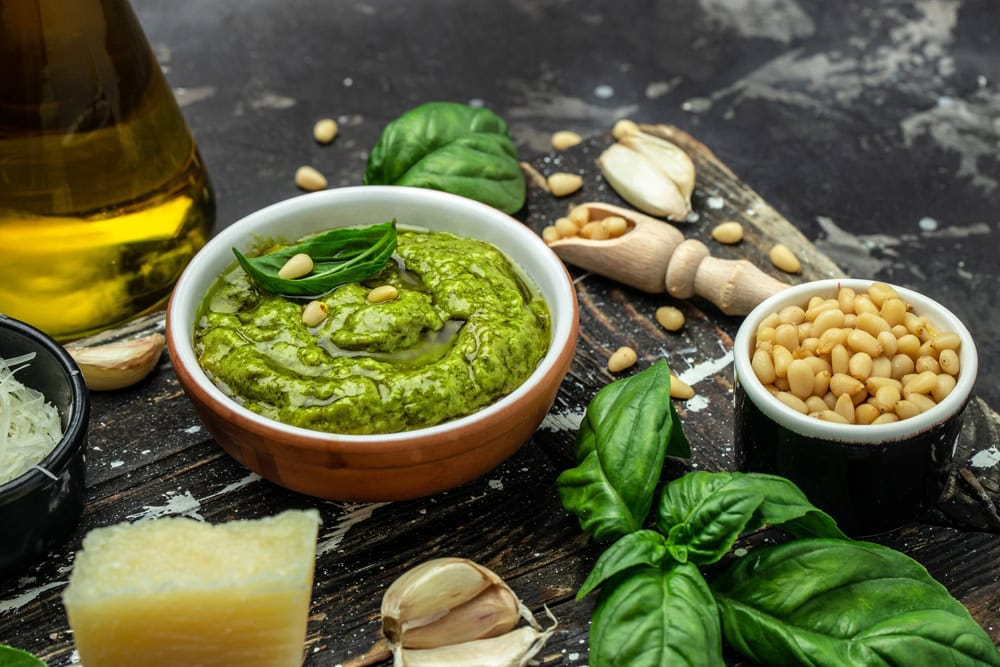
5 Delicious Homemade Pesto Recipes That Beat Shop-Bought
There are few things I love more in the kitchen than the combination of fresh herbs, good olive oil, garlic and Parmesan. Add a handful of nuts and blend everything together, and you have one of the most versatile sauces imaginable.
For years, I relied on jars of pesto from the supermarket. They were convenient enough for a quick pasta supper, but once I started growing herbs at home, making my own became something of a kitchen obsession.
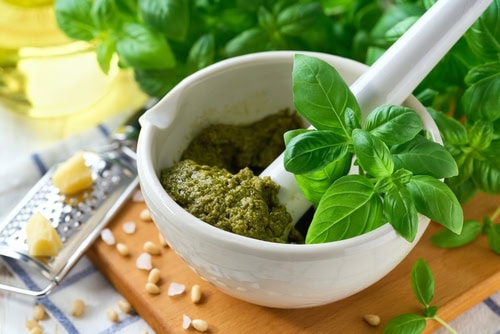
Freshly made pesto has a completely different character. The herbs taste brighter, the garlic has more punch, and you can decide whether you want a smooth, silky sauce or something a little more rustic.
Better still, homemade pesto takes just minutes to prepare.
While traditional basil pesto will always have a special place in my kitchen, there’s no reason to stop there. Rocket brings a delicious peppery sharpness, sun-dried tomatoes create a rich Mediterranean sauce, and coriander makes a wonderful alternative when you fancy something a little different.
If you’ve never made pesto from scratch, these five easy homemade pesto recipes are an excellent place to start.
What Is Pesto?
Pesto is an Italian sauce traditionally associated with Liguria, particularly the city of Genoa.
The best-known variety, pesto alla Genovese, is made using fresh basil, garlic, pine nuts, extra virgin olive oil, Parmigiano Reggiano, Pecorino and salt.
The name comes from the Italian verb pestare, meaning to pound or crush, referring to the traditional method of preparing the ingredients using a mortar and pestle.
The result is a fragrant green sauce with a slightly coarse texture and an unmistakably fresh flavour.
Although classic Genovese pesto uses a fairly specific combination of ingredients, countless modern variations incorporate different herbs, vegetables, nuts and cheeses.
These alternatives aren’t necessarily traditional Italian pestos, but they follow the same simple principle: combine intensely flavoured ingredients with oil to create a delicious, versatile sauce.
Why Make Your Own Pesto?
The most obvious reason is flavour.
Fresh basil, garlic and good-quality olive oil produce a vibrant sauce that’s difficult to replicate in a jar. Homemade pesto also allows you to adjust the ingredients to suit your preferences.
If you enjoy garlic, add a little more. Prefer a sharper, cheesier finish? Increase the Parmesan. Want something with more texture? Pulse the ingredients briefly rather than blending them until completely smooth.
There are practical advantages, too.
Making pesto provides an excellent way to use fresh herbs before they wilt, particularly if you grow basil, parsley or coriander at home.
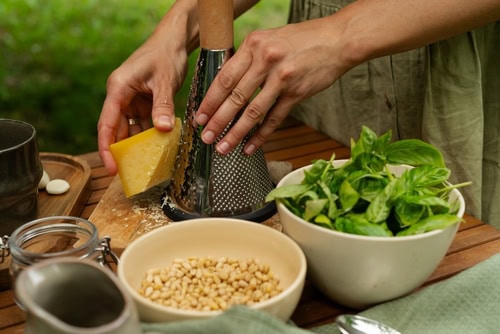
You can also prepare small quantities, experiment with ingredients already in your cupboards and portion the sauce for future meals.
It’s worth remembering that homemade pesto isn’t automatically healthier or more environmentally friendly than every shop-bought alternative. Nutritional content depends on the ingredients and quantities used, while environmental impact depends on factors including sourcing, packaging and food waste.
However, preparing your own does give you complete control over what goes into the finished sauce.
1. Classic Homemade Basil Pesto
Preparation: 10 minutes | Makes: approximately 250g | No cooking required
If you’re going to master just one homemade pesto recipe, make it this one.

Classic basil pesto is beautifully simple, relying on a handful of good-quality ingredients to deliver its distinctive flavour.
Fresh basil brings sweetness and fragrance, pine nuts add richness, while garlic and Parmesan provide the savoury depth that makes the sauce so irresistible.
I particularly love this version with spaghetti, but it’s equally delicious spooned over burrata, spread inside a sandwich or served alongside grilled chicken.
Ingredients
- 50g fresh basil leaves
- 40g pine nuts
- 50g finely grated Parmesan
- 1–2 garlic cloves, peeled
- 100ml extra virgin olive oil
- ¼ tsp fine sea salt, or to taste
- Freshly ground black pepper
- 1 tsp lemon juice, optional
Method
- Wash the basil leaves gently if necessary and dry them thoroughly. Excess water can dilute the sauce and affect its texture.
- For a slightly nuttier flavour, lightly toast the pine nuts in a dry frying pan over a low heat for 2–3 minutes, stirring regularly. Allow them to cool completely before using.
- Add the basil, pine nuts, Parmesan and garlic to a food processor.
- Pulse several times until the ingredients are finely chopped but still retain a little texture.
- With the processor running briefly at a low speed, gradually add the olive oil until the pesto reaches your preferred consistency.
- Season with salt and black pepper, adding a little lemon juice if you prefer a fresher finish.
- Taste and adjust the garlic, cheese or olive oil before serving.
Serving suggestion: Toss through freshly cooked linguine with a splash of reserved pasta cooking water. Finish with extra Parmesan, torn basil and freshly ground black pepper.
My tip: Avoid blending the pesto for too long. A slightly coarse texture is part of its appeal, and excessive processing can warm the ingredients and dull the basil’s fresh flavour.
2. Rocket and Walnut Pesto
Preparation: 10 minutes | Makes: approximately 230g | No cooking required
For anyone who enjoys punchy, peppery flavours, rocket pesto is a wonderful alternative to the traditional basil version.
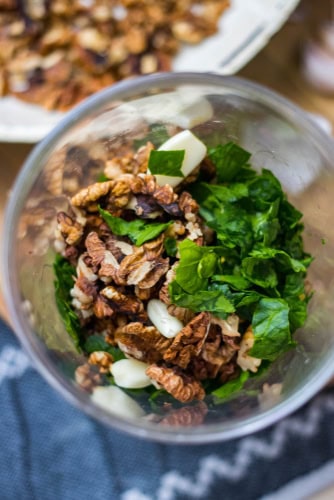
Rocket has a naturally assertive taste that works particularly well with the earthy richness of walnuts and the salty sharpness of Parmesan.
The finished sauce is slightly more robust than classic pesto, making it an excellent accompaniment to steak, roasted mushrooms and grilled vegetables.
It’s also an easy way to use up a bag of rocket that’s approaching the end of its shelf life.
Ingredients
- 60g fresh rocket
- 40g walnuts
- 40g finely grated Parmesan
- 1 garlic clove
- 80ml extra virgin olive oil
- 1 tbsp fresh lemon juice
- ¼ tsp sea salt, or to taste
- Freshly ground black pepper
Method
- Rinse the rocket if necessary and dry thoroughly.
- Place the walnuts in a dry frying pan over a medium-low heat and toast for approximately 3 minutes until fragrant. Allow them to cool.
- Add the rocket, walnuts, Parmesan and garlic to a food processor.
- Pulse until everything is roughly chopped.
- Add the olive oil and lemon juice, then pulse again until combined.
- Season with salt and black pepper.
- If the pesto is thicker than you’d like, add another tablespoon of olive oil or a little water when serving.
Serving suggestion: Spoon over sliced ribeye steak, roasted new potatoes or a warm salad of grilled courgettes and peppers.
My tip: Rocket can vary considerably in pepperiness. Taste a leaf before making the pesto and adjust the Parmesan and lemon juice accordingly.
3. Sun-Dried Tomato and Almond Pesto
Preparation: 10 minutes | Makes: approximately 250g | No cooking required
Not all pesto needs to be green.
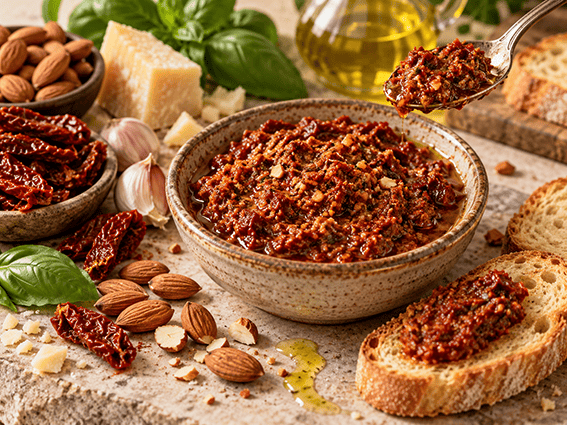
This rich, deeply savoury sun-dried tomato version takes inspiration from Sicilian-style red pesto, combining concentrated tomato flavour with almonds, garlic, olive oil and Parmesan.
The result is a beautifully textured sauce that’s particularly good with pasta, crusty bread or roasted Mediterranean vegetables.
Unlike fresh herb pestos, which tend to have a delicate, grassy character, this variation is bold, tangy and intensely satisfying.
It’s the sort of thing I like to keep in the fridge for adding instant flavour to a simple lunch.
Ingredients
- 150g sun-dried tomatoes in oil, drained
- 40g blanched almonds
- 40g finely grated Parmesan
- 1 garlic clove
- 50ml extra virgin olive oil
- 1 tbsp lemon juice
- 10g fresh basil leaves
- ¼ tsp dried chilli flakes, optional
- Freshly ground black pepper
- Salt, only if needed
Method
- Drain the sun-dried tomatoes, reserving a little of their oil if you’d like to use it in the sauce.
- Lightly toast the almonds in a dry frying pan for 3–4 minutes until fragrant, then allow them to cool.
- Place the tomatoes, almonds, Parmesan, garlic and basil in a food processor.
- Pulse until the mixture becomes a coarse paste.
- Add the olive oil and lemon juice, blending briefly until everything is combined.
- Stir in the chilli flakes if using.
- Taste before adding salt, as the tomatoes and Parmesan may already provide plenty of seasoning.
Serving suggestion: Stir through penne with a little pasta cooking water, then finish with torn mozzarella and fresh basil. It’s also excellent spread over toasted sourdough with grilled aubergine.
My tip: Choose soft, oil-packed sun-dried tomatoes for the easiest blending. If you’re using dry-packed tomatoes, rehydrate them according to the packet instructions before making the pesto.
4. Spinach and Lemon Pesto
Preparation: 10 minutes | Makes: approximately 230g | No cooking required
This bright, fresh spinach pesto is ideal when you want something gentler than traditional basil or rocket pesto.
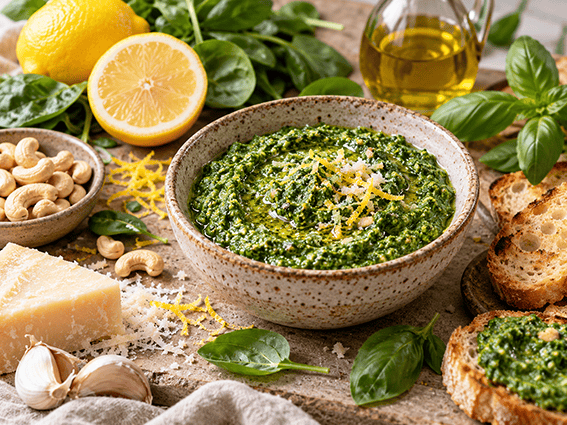
Baby spinach has a mild flavour, allowing the garlic, lemon and Parmesan to come through without overwhelming the sauce.
It’s particularly good with fish, chicken and light pasta dishes, although I also love it stirred into warm grains or spooned over roasted vegetables.
A little fresh basil adds an aromatic lift, while cashews give the pesto a pleasantly creamy consistency.
Ingredients
- 70g fresh baby spinach
- 20g fresh basil leaves
- 40g unsalted cashews
- 40g finely grated Parmesan
- 1 garlic clove
- 70ml extra virgin olive oil
- Finely grated zest of ½ unwaxed lemon
- 1 tbsp fresh lemon juice
- ¼ tsp fine sea salt, or to taste
- Freshly ground black pepper
Method
- Wash and thoroughly dry the spinach and basil.
- Place the cashews in a food processor and pulse until roughly chopped.
- Add the spinach, basil, Parmesan, garlic and lemon zest.
- Pulse until the ingredients begin to form a coarse mixture.
- Gradually add the olive oil, processing briefly until the pesto reaches your preferred texture.
- Stir in the lemon juice and season with salt and pepper.
- Taste and adjust with a little extra lemon juice if desired.
Serving suggestion: Serve with grilled salmon, lemon-roasted chicken or spaghetti topped with freshly grated Parmesan.
My tip: Baby spinach contains quite a lot of moisture, so make sure the leaves are dry before blending. Add the olive oil gradually rather than all at once to avoid making the pesto too loose.
5. Coriander, Lime and Cashew Pesto
Preparation: 10 minutes | Makes: approximately 220g | No cooking required
This is perhaps the least traditional pesto in the collection, but it’s also one of the most versatile.
Fresh coriander, lime, garlic and cashews create a wonderfully fragrant sauce with a completely different personality from Italian basil pesto.
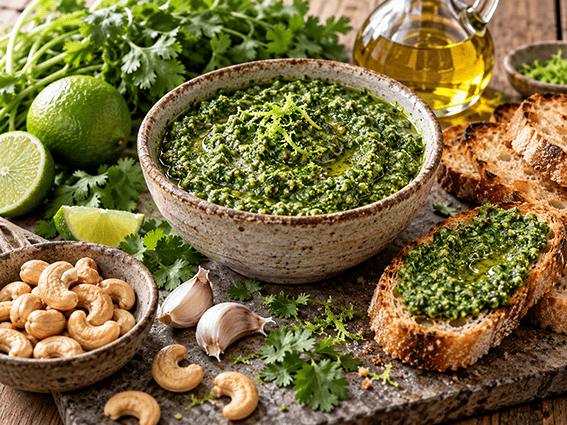
It’s particularly good with Asian-inspired dishes, grilled prawns, chicken skewers and noodles.
A little fresh chilli gives it warmth, while lime juice balances the richness of the cashews and olive oil.
If you enjoy bold, fresh flavours, this is one worth experimenting with.
Ingredients
- 50g fresh coriander, leaves and tender stems
- 40g unsalted cashews
- 1 garlic clove
- 1 small green chilli, deseeded if preferred
- 70ml light olive oil
- 2 tbsp fresh lime juice
- Finely grated zest of ½ lime
- ¼ tsp sea salt, or to taste
- 1 tsp honey, optional
Method
- Wash the coriander thoroughly and dry well.
- Lightly toast the cashews in a dry frying pan for 2–3 minutes, then allow them to cool.
- Add the coriander, cashews, garlic and chilli to a food processor.
- Pulse until the ingredients are finely chopped.
- Gradually pour in the olive oil and lime juice, blending briefly until the mixture comes together.
- Add the lime zest, salt and optional honey.
- Taste and adjust the balance of acidity, chilli and seasoning.
Serving suggestion: Spoon over grilled chicken, toss through rice noodles or use as a dressing for a warm salad with roasted vegetables.
My tip: Unlike traditional pesto, this version doesn’t need cheese. The cashews provide enough richness, while the lime and coriander keep the flavour wonderfully fresh.
How to Make Perfect Homemade Pesto Every Time
Although pesto is one of the easiest sauces to prepare, a few simple techniques can make a noticeable difference to the finished result.
Use Fresh, Good-Quality Ingredients
Because pesto requires so few ingredients, their quality matters.
Choose fresh, aromatic herbs and remove any leaves that are wilted, discoloured or damaged.
Extra virgin olive oil adds flavour as well as texture, so use one you genuinely enjoy. A particularly strong or bitter oil may dominate delicate ingredients such as basil or spinach.
Freshly grated hard cheese generally blends more smoothly and has a fuller flavour than pre-grated alternatives.
Dry Your Herbs Thoroughly
Water left on freshly washed herbs can make pesto watery and reduce its flavour intensity.
A salad spinner is particularly useful, although gently patting the leaves dry with clean kitchen paper also works.
Don’t Overprocess the Ingredients
Pesto shouldn’t necessarily resemble a perfectly smooth purée.
Brief pulses in a food processor allow you to retain some texture, creating a sauce that feels more rustic and substantial.
For an especially traditional basil pesto, use a mortar and pestle to crush the garlic, pine nuts and basil before gradually incorporating the remaining ingredients.
Taste Before Adding Extra Salt
Parmesan, Pecorino and sun-dried tomatoes can all contribute significant saltiness.
Always taste the finished sauce before adding additional seasoning.
Adjust the Consistency for Different Dishes
Thicker pesto is ideal for spreading on bread or using as a dip.
For pasta, however, a slightly looser sauce often works better.
Rather than adding excessive quantities of olive oil, stir a little warm pasta cooking water into the pesto when combining it with cooked pasta.
This helps the sauce coat the pasta more evenly.
Can You Make Pesto Without Pine Nuts?
Absolutely.
Although pine nuts are traditionally associated with basil pesto, they’re not essential for creating a delicious homemade variation.
Walnuts, cashews and almonds all work well, offering slightly different flavours and textures.
Walnuts have an earthy richness that pairs beautifully with rocket, while cashews create a softer, creamier finish. Almonds provide a more pronounced nutty flavour, particularly when lightly toasted.
Sunflower or pumpkin seeds can also be used in pesto-style sauces.
However, people with food allergies should choose ingredients carefully and check packaging for relevant allergen information.
How to Store Homemade Pesto Safely
Fresh pesto is best enjoyed soon after preparation, particularly when made with delicate herbs such as basil or coriander.
Because homemade pesto contains fresh ingredients and often raw garlic combined with oil, correct storage is important.
Transfer the finished sauce to a clean, airtight container and refrigerate promptly at 5°C or below.
For a cautious approach to home-prepared pesto, use refrigerated batches within 48 hours or freeze them immediately for later use. Garlic-in-oil preparations have particular food safety considerations, including the risk of botulism when stored incorrectly, so homemade pesto shouldn’t be treated like a shelf-stable commercial sauce.
A thin layer of olive oil may help reduce surface discolouration, but it does not make pesto safe to store for longer.
Never leave homemade pesto standing at room temperature for extended periods.
If you’re preparing a large batch, freezing is the most practical option.
Can You Freeze Homemade Pesto?
Yes, and it’s an excellent way to reduce waste when you have more fresh herbs than you can use immediately.
Spoon freshly prepared pesto into a clean ice cube tray or small freezer-safe containers.
Freeze promptly, then transfer individual portions to labelled freezer bags or containers once solid.
For best flavour and quality, aim to use frozen pesto within approximately three months.
Small portions are particularly useful because you can defrost only what you need for a meal.
Thaw pesto in the refrigerator rather than leaving it on the kitchen counter.
Some herb-based pestos may darken slightly after freezing, but this doesn’t necessarily mean they’ve spoiled.
If you’d like a particularly fresh flavour when serving, prepare a version without the cheese and stir freshly grated Parmesan into the thawed sauce.
10 Delicious Ways to Use Homemade Pesto
Pesto deserves a place in the kitchen beyond the occasional bowl of pasta.
Once you’ve prepared a batch, there are countless ways to incorporate it into everyday cooking.
- Pasta: Toss through spaghetti, linguine or penne with a little reserved cooking water.
- Sandwiches: Spread onto sourdough, focaccia or toasted ciabatta.
- Pizza: Use instead of tomato sauce or add small spoonfuls after baking.
- Grilled chicken: Serve alongside chicken breasts, thighs or skewers.
- Roasted vegetables: Drizzle over courgettes, peppers, aubergines or potatoes.
- Fish: Pair spinach and lemon pesto with salmon, cod or sea bass.
- Salad dressings: Loosen a spoonful with lemon juice and olive oil.
- Egg dishes: Add a little pesto to scrambled eggs, omelettes or frittatas.
- Soups: Stir through vegetable soup just before serving.
- Cheese boards: Serve thicker pesto alongside mozzarella, burrata or crusty bread.
Experimenting with different combinations is part of the enjoyment. A punchy rocket pesto can complement a rich steak, while sun-dried tomato pesto works beautifully with Mediterranean vegetables.
Frequently Asked Questions About Homemade Pesto
What are the main ingredients in traditional pesto?

Traditional pesto alla Genovese contains fresh basil, garlic, pine nuts, extra virgin olive oil, hard Italian cheeses and salt. Other pesto-style sauces can incorporate different herbs, vegetables, nuts and seeds.
Is homemade pesto better than shop-bought?
Homemade pesto offers greater control over freshness, texture and flavour. Shop-bought pesto remains a convenient option, and nutritional differences depend on the ingredients and quantities used in each product.
Can you make pesto without Parmesan?
Yes. For a dairy-free alternative, omit the cheese and adjust the seasoning to taste. Nutritional yeast can provide a savoury flavour in some recipes, although it won’t reproduce Parmesan exactly.
Why does homemade pesto turn brown?
Basil and other fresh herbs can darken when exposed to oxygen or excessive heat during preparation. Working quickly, avoiding overprocessing and storing pesto in an airtight container can help preserve its appearance.
Can you use frozen basil to make pesto?
Yes, although the texture and appearance may differ from pesto made with freshly picked leaves. Frozen basil is often better suited to sauces that will be stirred into cooked dishes.
Do you need to toast nuts before making pesto?
No. Raw nuts can be used in pesto. Toasting them creates a deeper, nuttier flavour, but allow them to cool before blending with delicate fresh herbs.
Can you make pesto without a food processor?
Yes. A mortar and pestle is the traditional method and produces an excellent textured sauce. Alternatively, finely chop the herbs, garlic and nuts before stirring in the cheese and olive oil.
Is pesto suitable for vegetarians?
Some traditional hard cheeses, including Parmigiano Reggiano, contain animal rennet and are not suitable for vegetarians. Choose a vegetarian-labelled hard cheese alternative where necessary.
Five Recipes, Endless Possibilities
One of the greatest pleasures of making pesto from scratch is discovering how much variety can come from such a simple cooking technique.
Classic basil pesto will always be a favourite, especially when fresh basil is growing abundantly in the kitchen. But there’s something equally satisfying about turning a handful of rocket into a punchy sauce for steak or transforming sun-dried tomatoes into a rich accompaniment for pasta.

These five homemade pesto recipes are designed to be adapted, whether you’re working with herbs you’ve grown yourself, using ingredients already in the fridge or simply looking for something different to serve with dinner.
Once you discover how easy it is to make fresh pesto, there’s a good chance a jar from the supermarket will become the backup rather than the first choice.


