
What High-End Travellers Really Want From London in 2026
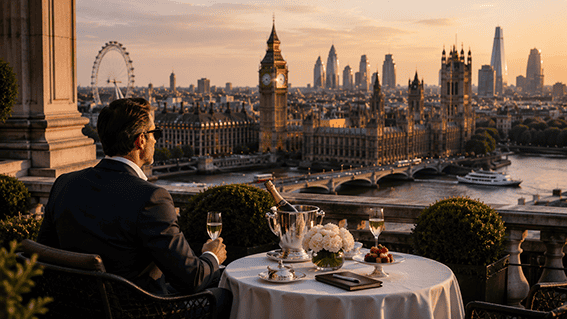
London has never had much trouble selling luxury. You can sleep in a suite in Mayfair, spend the afternoon on Bond Street, have dinner somewhere with a Michelin star and be driven back to your hotel without ever touching the Tube.
But the interesting thing about luxury travel in 2026 is that expensive things alone aren’t really enough anymore. High-end travellers increasingly want trips built around their own interests, hotels that work around them, access they couldn’t easily arrange themselves and fewer irritating logistics to deal with.
So, what does all of that mean for somebody spending serious money on a trip to London?
Trips Are Becoming Much More Personal
Luxury travel used to mean taking a fairly standard London itinerary and upgrading the obvious parts: better hotel, better car, better restaurant.
Now, the useful question is much more specific: what is this person actually interested in?
An art collector visiting during Frieze, for example, probably doesn’t need somebody to explain that the fair is in Regent’s Park. They need somebody who understands what they collect, which galleries are relevant to them and which artists are worth paying attention to.
The same applies to shopping.
Someone interested in tailoring doesn’t just need a chauffeur to Savile Row. They need the right appointment. A traveller looking for a traditional structured suit may be better suited to a completely different house than somebody wanting something softer and more contemporary.
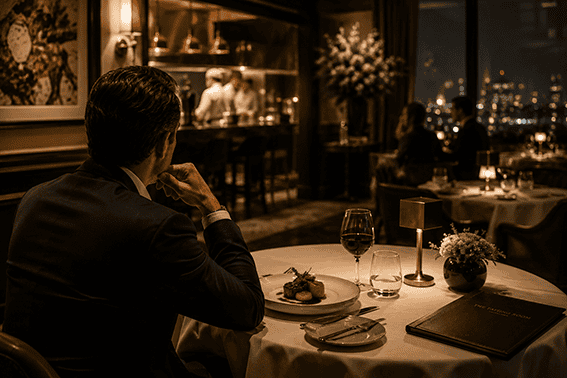
Restaurants are no different. Do you want a three-hour tasting menu, a lively counter seat, somewhere discreet for a business dinner or the restaurant London chefs are currently talking about?
The question is less “What are the best things to do in London?” and more “Given what I already love, what can London offer me that I wouldn’t easily find or arrange myself?”
Five-Star Hotels Need to Work Around the Guest
Luxury hotels have traditionally been very good at upgrading rooms and rather less imaginative about changing the rules around them.
A long-haul arrival exposes the problem immediately.
Land at Heathrow at 7am, reach Mayfair at nine, and a conventional 3pm check-in suddenly feels rather strange when the room costs thousands of pounds a night.
That’s why flexibility is becoming a more meaningful luxury than another bottle of Champagne in the suite.

At the top end of London’s hotel market, guests increasingly expect the experience to begin before they reach reception. Airport transfers, assistance with luggage, flexible arrival arrangements, concierge support and access to hotel cars can make a much bigger difference to a trip than another decorative flourish in the room.
The Chancery Rosewood, which opened in the former US Embassy on Grosvenor Square in 2025, is a good example of the increasingly residential approach being taken by London’s newest generation of luxury hotels. Its larger suites provide substantially more than somewhere to sleep, with living, dining and entertaining spaces designed for guests using the hotel as a temporary London base.
For travellers, these are increasingly the details worth investigating before booking.
Can the hotel accommodate an early arrival after an overnight flight? Will luggage be handled while you go straight to lunch or a meeting? Can the car service adapt if plans change? What arrangements can be made for a late departure?
At this end of the market, good service should mean the hotel fitting around the trip rather than the trip fitting around the hotel.
Real Access Should Get You Something You Couldn’t Book Yourself
Luxury travel has stretched the word VIP almost to meaninglessness.
If anybody with a credit card can buy exactly the same “VIP package” online, it may be comfortable, but it isn’t particularly exclusive.
Real access is better judged by one question: does it allow you to experience something differently?
That might mean seeing a collection outside normal public hours, arranging an appointment with an archive that isn’t part of the standard visitor route, securing a private room at a venue where entertaining clients matters as much as watching the event, or gaining access to an experience that isn’t ordinarily available to visitors.

When somebody offers an exclusive experience, ask what is actually exclusive about it.
Is the venue closed to everybody else? Are you meeting somebody visitors wouldn’t normally meet? Are you seeing something that isn’t ordinarily accessible? Has something genuinely been arranged specifically for you?
If the answer is simply priority entry, better seating or a more expensive ticket, that’s more of an upgrade.
There’s nothing wrong with upgrades, of course.
But travellers spending serious money should know when they’re buying convenience and when they’re buying genuine access.
Privacy Is Becoming a Luxury in Its Own Right
For some travellers, being able to control who is around them has become pretty valuable.
That can mean a private dining room, but it goes considerably further.
Families may want connecting suites and a separate living area so they aren’t effectively spending a week sitting on hotel beds. Somebody hosting business contacts may want dinner somewhere conversations can’t easily be overheard. High-profile guests may care far more about discreet arrivals and private spaces than whether the restaurant has a six-month waiting list.
These are the kind of things worth asking about before booking.
Does the private dining room have its own entrance or do guests still walk through the main restaurant? Is there somewhere separate for drinks afterwards? Can service be arranged without constantly interrupting the table? What happens when the main restaurant closes?
For groups staying several nights, a residential-style suite or serviced London residence can sometimes make more sense than repeatedly booking private rooms elsewhere.
Dinner can run late, drinks can continue afterwards, and nobody has to organise twelve people into cars at midnight.
Solo Travellers Want Their Evenings to Feel Planned Too
Travelling alone creates a different problem, particularly on short business or luxury trips.
You can have an excellent hotel, meetings all day and a table at one of London’s best restaurants, but an evening can still feel rather flat if you’re sitting through it by yourself.
Some solo travellers already have friends or professional contacts in London. Others use private members’ clubs, social introductions, dating apps or events to meet people during their stay.
Increasingly, however, the social side of a short trip can be something travellers choose to arrange in advance rather than simply hoping it works itself out once they arrive.
Professional companionship is another option. Services exist in London through which adults can arrange paid social companionship for occasions such as dinner, drinks or an evening out.

A traveller staying in Mayfair for a couple of nights might, for example, browse an agency such as Blue Monday and arrange companionship in advance rather than spending limited free time trying to make social plans after arriving in the city.
For some travellers, the appeal is straightforward: they can plan the kind of evening they want, know who they will be spending it with and avoid leaving the social side of a very short London stay entirely to chance.
As with any personal service arranged privately, travellers should understand exactly what is being offered, make their own checks before booking and choose an established provider with clear terms and arrangements.
Convenience Is Becoming More Valuable Than Visible Excess
Perhaps one of the biggest changes in luxury travel is that convenience itself has become something worth paying for.
Nobody spending serious money on a few days in London particularly wants to waste an afternoon dealing with restaurant cancellations, waiting for a car that hasn’t arrived or discovering that an important appointment was booked for the wrong day.
A genuinely well-planned luxury trip should remove those small pieces of friction.
That doesn’t necessarily mean scheduling every minute.
In fact, having enough flexibility to change your mind can be part of the luxury.
If lunch runs long, there shouldn’t be a frantic dash across London to make the next reservation. If the weather is unexpectedly glorious, there should be room to abandon an indoor afternoon and do something else.
The best itineraries provide structure without making a holiday feel like a military operation.
What Do High-End Travellers Actually Want From London?
London doesn’t have a shortage of expensive things to do.
The harder part is choosing the right ones.

The most successful luxury trips aren’t necessarily those containing the greatest number of five-star hotels, famous restaurants and supposedly unmissable experiences. They’re the ones where the choices make sense for the person actually taking the trip.
Spend money where it changes the experience. Pay for privacy when privacy matters. Buy access when it genuinely provides something unavailable elsewhere. Use good service to remove tedious logistics and skip the supposedly essential London experiences that don’t interest you.
London will happily supply the luxury.
The clever part is making sure you’re paying for the bits that actually improve your stay.


