

Stop Cutting Out Carbs: Build a Better Plate for Weight Loss Instead
Bread goes first.
Then pasta. Potatoes become suspicious. Cheese starts feeling like something that needs to be earned. Before long, what began as an attempt to eat a little better has turned into an increasingly complicated collection of foods you have decided you aren’t allowed to eat.
It’s a familiar pattern in weight loss – and one that can make eating well considerably harder than it needs to be.
A survey of more than 3,000 people trying to lose weight found that almost half had eliminated entire food groups at some point. Calorie restriction was even more common, while meal replacements and weight-loss supplements had also been tried by significant numbers.
But perhaps we’ve been approaching the problem from the wrong direction.
Instead of looking at a plate and asking “What should I remove?”, a much more useful question might be:
“What’s missing?”
Because a healthy meal doesn’t have to begin with banning bread.
Why Cutting Out Entire Food Groups Is So Appealing
There is something wonderfully straightforward about a food rule.
No carbs. No bread. No dairy. No sugar.
You don’t have to think about portions, balance or the nutritional quality of an entire meal because you’ve been given one simple instruction: don’t eat the thing.
The problem is that real life doesn’t divide itself quite so conveniently into permitted and forbidden foods.
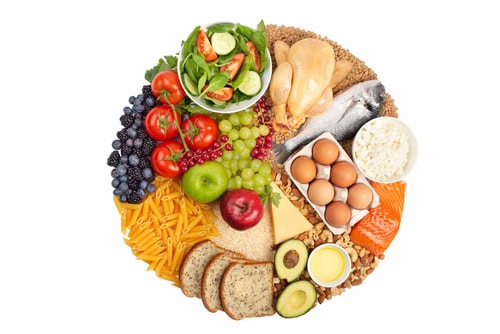
Carbohydrates aren’t one single food. Neither is dairy. And labelling an entire category as inherently “bad” overlooks the very different nutritional profiles of the foods within it.
It can also make everyday eating unnecessarily difficult.
Dinner with friends becomes an exercise in menu negotiation. Holidays require planning around self-imposed restrictions. A sandwich becomes something to feel guilty about.
Unless there’s a medical, ethical or personal reason for avoiding a particular food, healthy eating doesn’t automatically require eliminating it.
The Plate Rule Is Far Easier
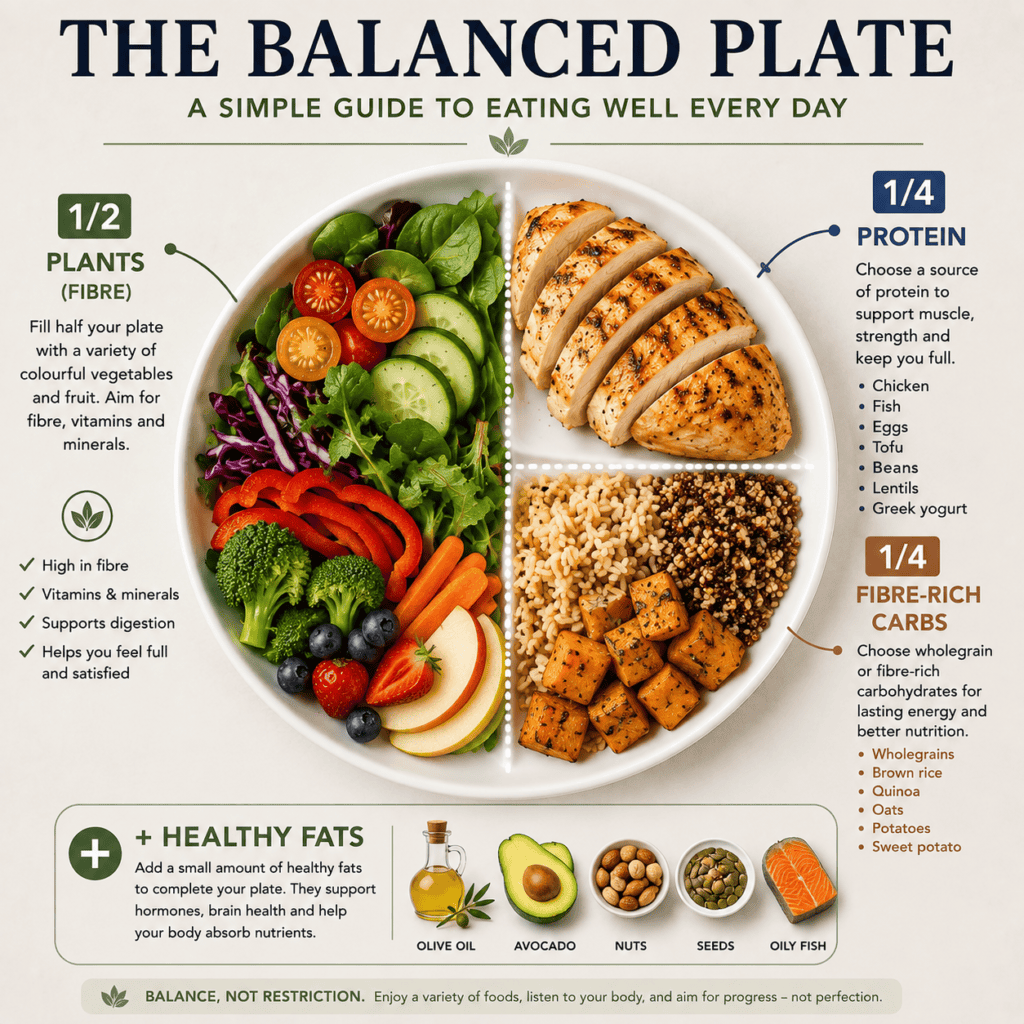
Forget complicated diet rules for a moment and look at your plate.
A useful everyday meal can contain four broad elements:
- A source of protein
- Fibre-rich carbohydrates or wholegrains
- Plenty of vegetables or fruit
- A source of healthy fats
It isn’t a rigid mathematical formula and every meal doesn’t need to look identical.
Think grilled chicken, roasted vegetables, potatoes and olive oil. Salmon with brown rice and greens. Eggs with wholegrain toast, avocado and tomatoes. Greek yoghurt with oats, berries, nuts and seeds.
Even pasta can quite happily remain on the menu. Add vegetables and a useful source of protein, choose wholegrain pasta when you enjoy it, and suddenly you’re thinking about the quality of the entire meal rather than treating the pasta itself as the problem.
That’s a far more flexible way to eat.
Start With Protein
If you’re trying to improve the balance of a meal, protein is a useful place to begin.
Chicken, fish, eggs, yoghurt, cottage cheese, tofu, beans, lentils and other protein-rich foods can all contribute.
Protein is particularly relevant during weight loss because maintaining muscle matters too. A falling number on the scales isn’t the only measure of successful weight management; preserving strength and lean mass is important for long-term health.
That doesn’t mean every meal needs to contain an enormous steak or that everyone needs protein shakes.
Simply make sure protein hasn’t accidentally disappeared from the plate.
Don’t Be Frightened of Carbohydrates
Carbohydrates have spent years being cast as the villain of weight loss.
But “carbs” encompasses everything from oats and potatoes to wholegrain bread, fruit, pulses and highly refined sugary foods. Treating all of those as nutritionally interchangeable doesn’t make much sense.

Wholegrain and fibre-rich carbohydrate sources can provide energy, fibre and important micronutrients.
Rather than automatically removing carbohydrates, think about which ones you’re choosing and what you’re eating alongside them.
A bowl of sugary cereal and a bowl of porridge with berries, seeds and yoghurt both contain carbohydrates. Nutritionally, however, they’re very different breakfasts.
Context matters.
Make Half the Decision About Plants
One of the easiest ways to improve a plate is to stop obsessing about what’s forbidden and simply add more plants.
Vegetables, fruit, herbs, nuts, seeds, beans and wholegrains increase the variety of foods in your diet and can contribute fibre alongside a broad range of vitamins and minerals.

Colour is a wonderfully uncomplicated prompt.
If dinner is currently fifty shades of beige, what could you add?
Roasted peppers. Spinach. Tomatoes. Broccoli. A crisp salad. Berries after dinner. Fresh herbs scattered over the top.
You don’t have to transform every meal into an enormous raw salad.
Just make plants a noticeable part of what you’re eating.
Healthy Fats Still Belong on the Plate
Fat underwent its own nutritional character assassination long before carbohydrates took over the role.
But foods including nuts, seeds, avocado, olive oil and oily fish provide unsaturated fats and other useful nutrients.

They also make food taste good.
And that’s more important than diet culture sometimes acknowledges.
If your “healthy” meal is so relentlessly joyless that you’re already fantasising about abandoning it while you’re eating it, it probably isn’t going to become your normal way of eating for the next decade.
Sustainable eating has to include pleasure.
This Matters Even More If You’re Taking Weight-Loss Medication
For people using GLP-1-based weight-loss medication, the conversation becomes slightly different.
These medicines can substantially reduce appetite, meaning some people find themselves eating much smaller meals than before.
When there’s less food going in, nutritional quality becomes particularly important.
Eliminating additional food groups unnecessarily can make achieving a varied intake more difficult when your portions are already reduced.
Protein deserves attention, particularly in relation to maintaining muscle, but so do fibre, carbohydrates, healthy fats, vitamins and minerals.
If medication is making it difficult to eat or drink adequately, or you’re concerned about nutritional deficiencies or significant muscle loss, that’s something to discuss with your prescriber, GP or a registered dietitian rather than attempting to solve through increasingly restrictive food rules.
Stop Trying to Make Every Meal Perfect
This might be the most useful rule of all.
One meal doesn’t determine whether your diet is healthy.
Neither does one slice of cake.
A takeaway on Friday night doesn’t cancel the vegetables you ate all week, just as eating a salad for lunch doesn’t magically transform everything else you eat.
Look at patterns rather than individual foods.
If most of your diet contains a good variety of nutritious foods, there is room for chocolate, pizza, pudding, crisps and whatever else you genuinely enjoy.
In fact, allowing them to exist without turning them into forbidden objects can make healthy eating feel considerably more normal.
Try the ‘What Can I Add?’ Trick
This is the habit worth stealing.
Before you remove something from your next meal, ask what you could add.
Having toast? Could you add eggs and tomatoes?
Making pasta? Add vegetables and some protein.
Having yoghurt? Throw in berries and seeds.
Fancy a jacket potato? Keep the potato and add tuna, cottage cheese, beans, salad or another filling you enjoy.
Eating a sandwich? Perhaps add a bowl of vegetable soup or some fruit alongside it.
It’s an extraordinarily simple shift, but it changes the whole tone of healthy eating.
Instead of deprivation, you’re thinking about nourishment.
Instead of making your plate smaller and smaller, you’re making it better.
The Best Diet Is the One You Can Actually Live With
There will always be another diet promising that one particular ingredient is standing between you and the body you want.
But unless you genuinely need to avoid something, healthy eating doesn’t have to mean spending your life saying no to bread, pasta, potatoes or cheese.
Build meals around protein, fibre-rich carbohydrates, plenty of plants and healthy fats. Enjoy the foods you love alongside them. Think about your diet across days and weeks rather than judging individual meals.
Most importantly, stop asking what you have to give up.
A better plate might be about what you put back in.
Original research and expert commentary for this feature were supplied by Simple Online Pharmacy.
As one of the top luxury magazines in the UK, Opulence brings you the best in design, culture and travel.


