
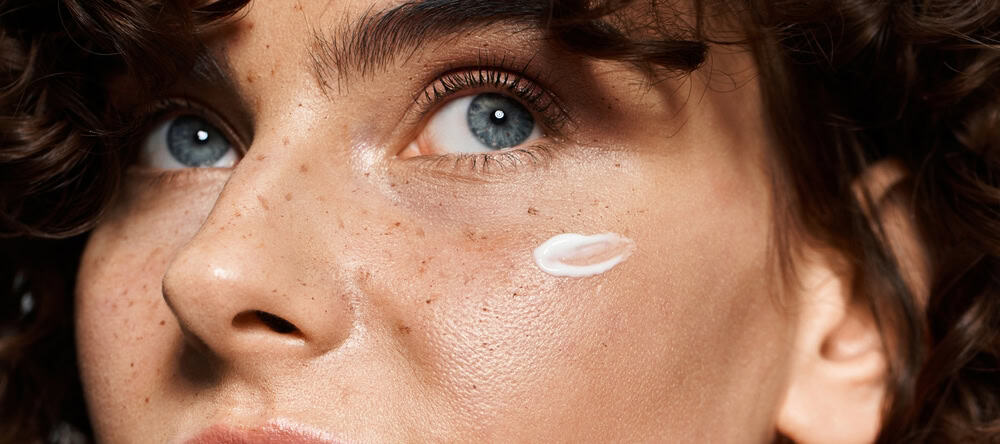
Is Your Skincare Routine Doing Too Much? 6 Signs It’s Time to Strip It Back
There was a time when a cleanser, moisturiser and perhaps something vaguely fancy in a tiny bottle constituted a perfectly respectable skincare routine.
Then skincare became a hobby.

Suddenly we had acids, retinoids, vitamin C, essences, toners, exfoliators, serums, masks and overnight treatments competing for space in the bathroom cabinet. And if social media was anything to go by, apparently all of them needed to be applied before bed.
Except your skin may not be remotely impressed by your dedication.
An elaborate routine isn’t automatically a better one. Combining too many products – particularly potent active ingredients – can leave skin irritated, dry and uncomfortable. Worse, the resulting redness and breakouts can convince us that we need another product to fix the problem.
Sometimes, the smartest thing you can do for your skin is considerably less.
The Problem With the 10-Step Skincare Routine
There isn’t anything inherently wrong with owning several skincare products. The issue is how they’re being used.
Ingredients such as retinoids and exfoliating acids can have legitimate roles in a skincare routine, but using multiple potentially irritating treatments too frequently can become counterproductive.
Your skin barrier – essentially the outermost protective layer of your skin – helps retain moisture while protecting against external irritants.
When that barrier isn’t functioning as well as it should, skin can become dry, flaky, itchy, sensitive or irritated.
And that creates a frustrating cycle.
Your skin feels dry, so you add another hydrating product. It becomes blemished, so you introduce an acne treatment. The redness continues, so another soothing serum joins the bathroom shelf.
Before long, you’re using more skincare to treat problems that may partly be caused by using too much skincare.
So how do you know when it’s time to simplify?
1. Your Face Feels Tight After Cleansing
That squeaky-clean feeling isn’t necessarily something to celebrate.
Your skin shouldn’t routinely feel painfully tight or uncomfortable after you wash it. If it does, your cleansing routine may be too harsh for your skin.
This could be down to the cleanser itself, cleansing too frequently, using very hot water or combining cleansing with too much exfoliation.
Dry and sensitive skin can be particularly susceptible.
Try switching to a gentle cleanser and lukewarm water, and resist the temptation to keep washing until your face feels completely stripped of oil.
Clean skin shouldn’t mean uncomfortable skin.
2. Products That Never Bothered You Suddenly Sting
A little tingling from certain products isn’t always significant, but skincare suddenly causing burning or persistent stinging deserves attention.
If your ordinarily dependable moisturiser now feels uncomfortable when you apply it, for example, it can be a clue that your skin has become irritated.
This is particularly worth considering if you’ve recently increased the frequency of a retinoid, introduced an exfoliating acid or started combining several active products.
Rather than immediately searching for a product to stop the stinging, look at what you’ve recently added or increased.
Your routine itself may be the culprit.
3. You’re Moisturising Constantly – Yet Still Feel Dry
This is an especially frustrating one.
You’ve bought the moisturiser. You’re applying it religiously. Perhaps you’ve added a hydrating serum underneath it.
Yet your skin still feels tight and dry.

Dryness, peeling, flaking and itching can all occur when skin becomes irritated. Continually adding more products isn’t necessarily going to resolve the underlying problem if you’re simultaneously overdoing treatments that your skin isn’t tolerating.
Try temporarily simplifying the routine rather than continuing to layer.
A gentle cleanser and suitable moisturiser may be enough while your skin settles, alongside sunscreen during the day.
4. You’ve Suddenly Started Breaking Out
More blemishes don’t always mean you need more anti-blemish products.
That’s an important distinction.
Heavy products can be unsuitable for some acne-prone complexions, while irritation from overusing active ingredients can produce bumps and redness that may be mistaken for a conventional breakout.
The understandable reaction is to attack it.
Another acid. Another spot treatment. More exfoliation.
And suddenly an already unhappy face is dealing with even more.
If breakouts coincide with a complicated new routine, consider whether you’ve changed too many things at once.
Introducing products individually also has another advantage: if your skin doesn’t like something, you’ve got a much better chance of identifying what caused the reaction.
5. Your Skin Is Permanently Red and Irritated
Persistent redness is one of the clearest reasons to reconsider what you’re putting on your face.
Retinoids and exfoliating acids can be irritating, particularly when introduced too quickly or combined in a routine that is simply too aggressive for your skin.

Fragrance and other ingredients can also trigger reactions in susceptible people.
The answer isn’t necessarily to create an elaborate timetable allowing you to squeeze every active ingredient you own into a seven-day period.
You don’t have to use everything.
If your face is repeatedly red, sore, itchy or inflamed, strip the routine back and seek professional advice if symptoms are persistent, severe or you’re concerned about them.
6. You Can’t Actually Be Bothered to Do Your Routine
This might be the most relatable warning sign of all.
If your nightly skincare routine requires 40 minutes, twelve bottles and the organisational abilities of an air-traffic controller, how often are you realistically going to do it?
A skincare routine needs to work in real life.

There’s little point owning an elaborate collection that you use sporadically because the thought of starting the process is exhausting.
A short routine you consistently follow is far more practical than an enormous one you regularly abandon.
And it can be surprisingly liberating to realise you don’t need to use every skincare product you own every single day.
What Does a Simple Skincare Routine Actually Look Like?
For many people, the foundations are remarkably straightforward.
Morning
A gentle cleanse if needed, followed by moisturiser and broad-spectrum sunscreen.
You can add a treatment or serum if there’s something specific you’re addressing and your skin tolerates it well.

Evening
Cleanse away sunscreen, makeup and the day’s grime, then moisturise.
Treatment products can be incorporated according to what you’re using and how well your skin tolerates them.
That’s it.
You can absolutely add more when there’s a reason to do so. The important part is that every bottle should have a purpose rather than simply occupying another stage in an arbitrary routine.
Do You Need to ‘Skin Cycle’?
You may have encountered the term skin cycling, which broadly refers to alternating stronger treatments with recovery nights rather than applying everything every evening.
For example, someone might use an exfoliating treatment on one night, a retinoid on another and then have nights focused on simple moisturising.
It can be a useful way of thinking about frequency, particularly if you’re prone to overenthusiastically applying every active product in the cupboard.
But you don’t need to follow a rigid social-media formula.
Different ingredients, concentrations and skin types have different requirements. If you’re using a prescription treatment, follow the advice you’ve been given rather than replacing it with a skincare schedule you’ve seen online.
And About That ‘pH Balance’…
There’s one part of the original advice that’s worth clarifying.
Skincare products do interact with the naturally acidic environment of the skin, but a red, flaky or inflamed face doesn’t allow you to diagnose yourself as simply being “too acidic” or “too alkaline”.

Likewise, the main concern with piling retinoids, exfoliating acids and other strong actives into the same routine isn’t that you’ve somehow mathematically ruined your facial pH.
Irritation and damage to the skin barrier are the more useful things to think about.
If your skin is telling you it’s unhappy, listen to it rather than attempting to calculate its chemistry from the bathroom mirror.
When Less Skincare Really Is More
The rise of skincare has brought plenty of positives. We’re more aware of sun protection, ingredients and looking after our skin than ever before.
But it has also created the impression that good skincare should be complicated.
It doesn’t have to be.
If your face is happy with three or four carefully chosen products, there is absolutely no requirement to turn your bathroom into a laboratory.
And if your previously happy skin suddenly becomes dry, red, stingy or covered in blemishes shortly after you’ve introduced an army of new products, buying product number eleven probably isn’t the obvious solution.
Put the acids down.
Step away from the serum.
Your skin might simply be asking for a quieter life.
Original story idea and expert skincare commentary supplied by Landys Chemist.


