

How to Create a Luxury Garden Retreat: 10 Expert Tips
A garden has so much potential. You can customise your home extensively too, of course, but outdoors, you don’t have the confines of four walls and a ceiling – you can do anything you want.
While this is most certainly a perk of having a garden, the sheer degree of choice you have can also feel totally overwhelming at times. You’ll likely find yourself staring at the area multiple times per day, running through different theoretical plans in your head to try and come up with something that’ll work.
It can be hard to visualise, and you’re certainly not alone. This article is here to help you hit the ground running with 10 top tips to get started.
1. Start With a Thorough Declutter
At the moment, you likely can’t see the wood for the trees – and quite literally. It’s best to start with a completely blank slate, so begin by conducting a thorough declutter of the area.
This will probably involve a lot of hard work, so be sure to enlist family and friends to help you if you can. What you’ll need to do to your space will depend on what you’re working with, but generally, you’ll be ripping up all the dead plants and those you don’t want, removing any rubbish and debris, and giving the hardcore a proper washdown (a pressure washer works great for this).
2. Designate Zones
Once you’ve decluttered, it’s time to move on to the preliminary design phase. Snap some pictures and upload them to a portfolio platform (Pinterest usually works best, as you can pin inspiration from elsewhere to your own board).
From here, you’ll want to make some basic diagrams and start zoning your space: consider what will go where, theoretically, and what sort of features you’d like. If you can digitally annotate your pictures with a stylus, that’s even better.
3. Add Your Greenery
The greenery is at the heart of any garden, so consider what sort of plants you’d like to see. Use the designated zones you thought up earlier to determine where different types of flowers and trees could go, and look into what sort of plants grow best in your climate and how the seasons influence them.
You could also decide to grow some of your own fruit and vegetables, in which case, you’ll want a zone dedicated only to growing things.
4. Choose Your Furniture Wisely
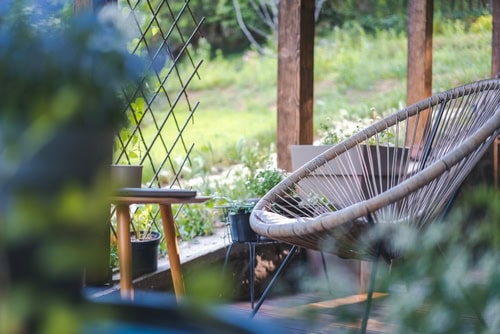
Finding the right type of furniture can be a real struggle if you don’t know what you’re looking for. There are a ton of stylistic choices that you’ve got to balance with function, but you’ve also got the issue of picking something that will last.

You’ll want furniture that’s protected and fortified against the wind, rain, and sun, even if it’ll be mostly under cover, and it’s generally worth spending a little bit more to get something of high quality. There are many great options out there, but Hartman has a fantastic range, so they’d be a good place to start looking.
5. Consider Natural Focal Points
As you work to build your outdoor space from the ground up, you should focus on designing specific focal points that draw attention. This creates a space that has layers and depth, and these elements can be natural or unnatural.
For example, your main focal point could be a large tree around which you plan wooden structures like decking, stringing fairy lights across both for a whimsical feel. Or, it could be an impressive water feature with a pond at one end of the garden – it’s up to you.
6. Incorporate Shaded Areas
All good garden designs need shaded areas, as without them, your ability to use it for multiple activities is significantly reduced.
There are numerous ways you can add shade. If your garden is big enough, a permanent gazebo is a nice, cheap option you could explore. Alternatively, full decking can drastically improve the utility of your garden, and in this case, you’d want to install wooden or metal roofing so that the area is protected from the elements.
7. Encourage Nature
When it comes to arranging your plants and considering dedicated areas like ponds, it’s important to think about how you’ll encourage nature and biodiversity.

Most people want their garden to feel alive and not just represent another decorative part of their home, so you should learn which seasonal plants attract the sort of life you want to see in your space (the visitors you get will differ depending on where you live, of course).
8. Refresh Your Patios and Walkways
Even if you don’t replace your patios and walkways, you’ll always want to refresh them.
If you used the powerwashing idea from earlier, you may even find that was all that needed doing, as paving that appears to be degraded is likely just really dirty. If you have flagstones, you could consider swapping the odd cracked flag for a new one instead of just getting a complete redesign, and if you have gravel, the area can easily be refreshed with a new bag.
9. Don’t Forget About Lighting
Most people understand the importance of lighting for the inside of their home, but they don’t prioritise their outdoor areas.

The reality is that if you want to use your garden in the evenings or at night, you’ll need high-quality lighting in place that’s both efficient and has great functionality. LEDs are usually the way to go, and these can come in many different shapes and sizes, from small solar-powered posts to large fixtures used to illuminate more broadly (there are even colour-changing options).
10. Think About the Decor
And finally, there’s the decor to think about. Once you have the main elements figured out, you’ll want to look into how you’re going to personalise the space and add the finishing touches. Think colour-coordinated throws and blankets for your decking area, or little garden-themed wall ornaments for the exterior walls of the house.
Go with your gut feeling, and try not to get too bogged down with rigidly adhering to a specific theme.
Wrapping Up
Hopefully, you’ve found the above tips inspiring and feel ready to tackle creating the garden you’ve always wanted. It won’t be easy, but it’ll most certainly be worth it. Good luck!


