

Brits Believe Diet Recommendations Are Stricter Than They Really Are
Most British are getting it wrong when it comes to national diet recommendations and believe they are supposed to eat diets which are far stricter than they actually should. That’s the finding of a new survey of more than 1000 UK adults commissioned by General Mills, makers of Fibre One and Nature Valley, which also found widespread confusion about fibre – an essential nutrient for gut health.[1]
Dietitian, Dr Carrie Ruxton, who advises the General Mills fibre awareness campaign, comments: “Sadly, most Brits are still in the dark when it comes to our national diet recommendations. In the new poll, more than four in ten (45%) adults say they are completely stumped when asked how much fibre they should be eating. Only 15% got full marks for answering 30 grams daily.

Fibre is one of the most misunderstood nutrients around with three quarters of people not being able to define it correctly. Yet, it’s vital for good health and wellbeing.
“Believing that the recommended diet is very strict could be putting people off trying to eat more healthily. The reality is, despite years of public health advice, people’s diets are still inadequate and they’re eating too little fibre, vegetables and too much sugar and salt”.
The survey also found that:
Just a fifth of people know that they should be eating at least 50 grams of protein daily but more think they should have far less than this.
Half of people wrongly think the salt maximum is 2 grams a day when the correct limit is 6 grams, around a teaspoon. While salt intakes in the UK have reduced in the past decade, more work is needed.
Almost 8 in ten adults think they should eat two or more servings of oily fish a week when the correct answer is a more manageable single weekly serving.

Fewer than one in ten (7%) know that the correct daily maximum for sugar is 7 cubes a day while two thirds believe they are only allowed 2 cubes. This doesn’t translate into intakes, as British are still getting more than they need.
There was better news for fruit and vegetables where the 5-a-day message was picked up correctly by nearly three quarters of adults in the survey.
GP, Dr Gill Jenkins, who also works with General Mills’ fibre campaign, says: “The lack of knowledge about fibre is worrying given that the new survey revealed that around half of adults have digestive health problems including bloating, constipation, hard stools, stomach cramps, bad breath and irritable bowel syndrome. Several gut problems can be helped simply by eating more fibre such as beans, pulses, vegetables, wholegrains, fruit, nuts and seeds.
“We know from official data collected by government departments that the UK is deficient in fibre[2] – with more than nine in 10 adults failing to get enough in their diets. This has implications for serious health conditions because low fibre diets increase the risk of developing bowel cancer, diverticulitis, heart disease, type 2 diabetes and obesity”.
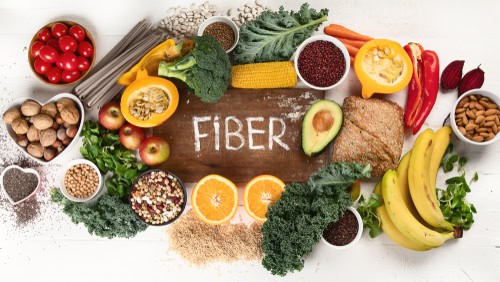
Dr Ruxton adds: “Apart from poor knowledge about how much fibre to eat, Brits are hampered in their good intentions by believing their diets to be healthier than they really are. While six in 10 adults responding to the survey thought that other adults should eat more fibre, this dropped to 45% when applied to their own diets. The reality is that most of us need to eat more fibre-rich foods to protect our health.
“The tangible benefits of eating more fibre include lower cholesterol levels, better control of blood glucose (sugar) levels, feeling full after meals – which may help with weight control – and more regular digestive health.
Interestingly, most people (63%) chose gut or digestive health when asked to name the main health benefit of eating fibre but are far less aware about the other health advantages”.
Dr Jenkins comments: “Better labelling might help as people struggle to recognise high fibre foods apart from the obvious bran flakes, fruit and wholegrain bread. Survey respondents said they would be more motivated to eat fibre if their favourite snacks contained added fibre or if their GP recommended it. As a GP, I certainly do promote high fibre diets especially to help prevent bowel cancer or control blood glucose levels”.
It’s easy to eat more fibre by following Dr Ruxton and Dr Jenkins’ top tips:
Choose high fibre breakfast cereals, such as shredded wheat, oats or wheat biscuits and add some chopped banana.
Chuck some canned pulses in stews, soups, curries, and casseroles. Replace some of the meat/poultry in a dish with mycoprotein or cooked beans.

Boost your recipes with fibre by adding seeds, chopped nuts or dried apricots to salads, or topping porridge or yogurts with fresh or canned fruit.
Swap white bread, pasta and rice with high fibre wholegrain versions, or try half-and-half to ease the change.
Add a side dish of vegetables or salad to every meal.
Packed lunches can include some salad or seeds on the side, or use peanut butter or humus on sandwiches instead of cheese or ham.
Make snacks count by choosing higher fibre options: vegetables sticks with guacamole, fresh fruit, oatcakes with nut butter, or roasted chickpeas, high fibre snack bars.


