
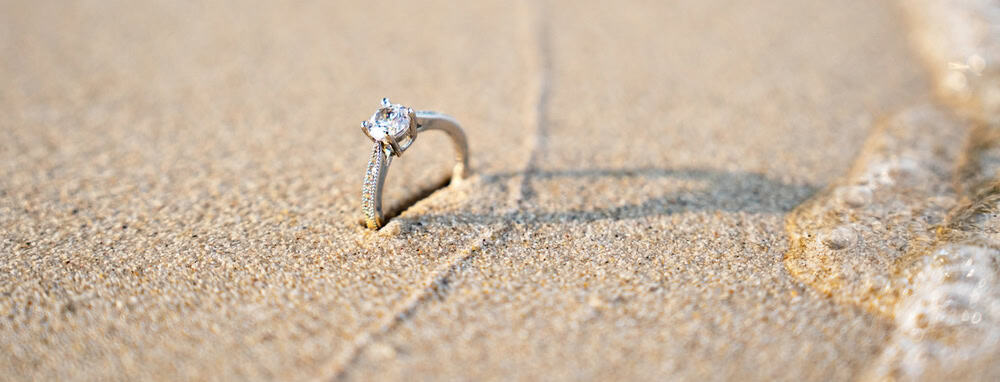
7 Summer Mistakes That Can Ruin Your Engagement or Wedding Ring
They symbolise forever, but it only takes one summer holiday to lose or damage your most important piece of jewellery. You might think your engagement or wedding ring is built to withstand anything, but heat, water, sunscreen and even hotel safes can quietly erode or ruin it. And most of the damage goes unnoticed until it’s too late.
“People often assume their rings are more durable than they are,” says Neil Dutta, Managing Director of jeweller Angelic Diamonds. “But we see the same kinds of damage every year during and after summer holidays. From loosened stones to warped bands, the warning signs usually come too late. It’s far easier to prevent problems than to fix them.”
Below, Dutta outlines the top seven most common summer mistakes and how to protect your engagement or wedding ring from avoidable damage.

- Cold water can make your ring fall off without warning
“Cold water causes blood vessels to contract, which reduces finger size more than people expect,” says Dutta. “The result is that your ring feels completely secure on dry land, but slips off in seconds once you’re swimming. It happens often, particularly with wedding rings that tend to be worn looser. One moment you’re enjoying the sea, the next the ring is gone, and you’ll never see it again.”
- Suncream can weaken your setting and cloud your diamond
“Suncream is one of the worst things for fine jewellery in summer,” he says. “It gets under the stone and around the claws, leaving behind a greasy residue that builds up over time. This not only dulls the appearance, especially in white gold and platinum, but can also contribute to loosening the setting. With engagement rings in particular, where the diamond sits higher, this grime can go unnoticed until it affects the sparkle.”
- Chlorine weakens gold, platinum, and even diamonds
“Chlorine has a slow but corrosive effect,” Dutta explains. “With regular exposure, it breaks down the metal alloys in gold and platinum, leading to discolouration or brittleness. Prongs become more fragile and less able to hold stones securely. Even diamonds can appear foggy after repeated pool contact. We’ve seen cases where both engagement and wedding rings show clear signs of structural wear after just one summer of daily swimming.”
- Saltwater and sand can warp and scratch your band
“Saltwater accelerates tarnish in silver, affects gold, and can even warp thinner bands if the metal is already under stress,” says Dutta. “But what people overlook is the sand. It’s incredibly abrasive. The fine particles work their way into every crevice and leave scratches on the shank, base and setting. This can be particularly visible on polished wedding bands where the surface is meant to stay clean and reflective.”
- Heat and sweat cloud the stone and irritate the skin
“Extended heat causes swelling, and sweat creates a sticky film under the band,” he says. “We often hear from people who experience discomfort or itching from rings they normally wear all day without issue. For stones, especially diamonds, sweat and sunscreen can combine to create a film that blocks light. It doesn’t take much to reduce the sparkle and alter how the ring looks in bright sunshine.”
- Wearing your ring on the flight may result in it needing to be cut off
Cabin pressure, dehydration and long hours sitting down can cause hands to swell noticeably during a flight,” says Dutta. “We hear from people who board wearing their ring comfortably, then struggle to remove it mid-flight or arrive with red, irritated skin. In some cases, the ring needs to be professionally cut off. If you’re flying long-haul, especially in summer, carry your ring in a secure pouch and put it on once you land.”
- A placeholder ring is the smartest thing you can pack
“There’s no downside to travelling with a substitute ring,” he says. “Whether it’s a silicone band, a plain stand-in, or even a CZ replica, wearing something low-risk allows you to enjoy your trip fully. You’re still marking the commitment, but without the stress or risk of damage. We especially recommend this for honeymooners. Your actual wedding ring or bespoke engagement ring can wait safely at home.”
How to keep your rings safe this summer

Neil has shared his top five tips for protecting your precious jewellery this summer:
- Insure before you fly: Whether it’s a bespoke engagement ring or a family wedding band, arrange comprehensive insurance ahead of any travel. Make sure it covers accidental loss, theft, and damage abroad.
- Don’t wear your ring while swimming: Avoid the sea and pool entirely when wearing rings. Water reduces friction, causes slippage, and introduces chemicals or salt that can damage both metal and stone.
- Invest in proper storage: Never throw your ring into a beach bag or purse. Use a soft-lined jewellery pouch or a hard-shell travel case that zips closed. Place it inside your suitcase lining, not in an obvious pocket.
- Clean gently after holidays: When you return, use warm water and a soft-bristled toothbrush to remove any build-up of sunscreen, sweat or sand. Avoid abrasive cleaners or harsh chemicals, which can strip finishes.
- Avoid over-cleaning with ultrasound: Ultrasonic cleaning is effective, but should only be done every few months by a professional. Too much vibration can weaken older settings or dislodge smaller accent stones.
Opulence Magazine – the luxury magazine UK readers turn to for curated style, travel and fine living.


